How It Shows Up
Most of the call isn't a door that's broken outright - it's a door that's done its job for thirty or forty years and is starting to show it.
Median 1983 housing stock
North Port's housing stock runs 1968 to 2003, with a median build year around 1983, and across the thirteen named areas we cover - from Warm Mineral Springs four miles out to Osprey nineteen miles south - that means a lot of original single-layer steel doors are still hanging on their original track and hardware.
Bowing panels and strain
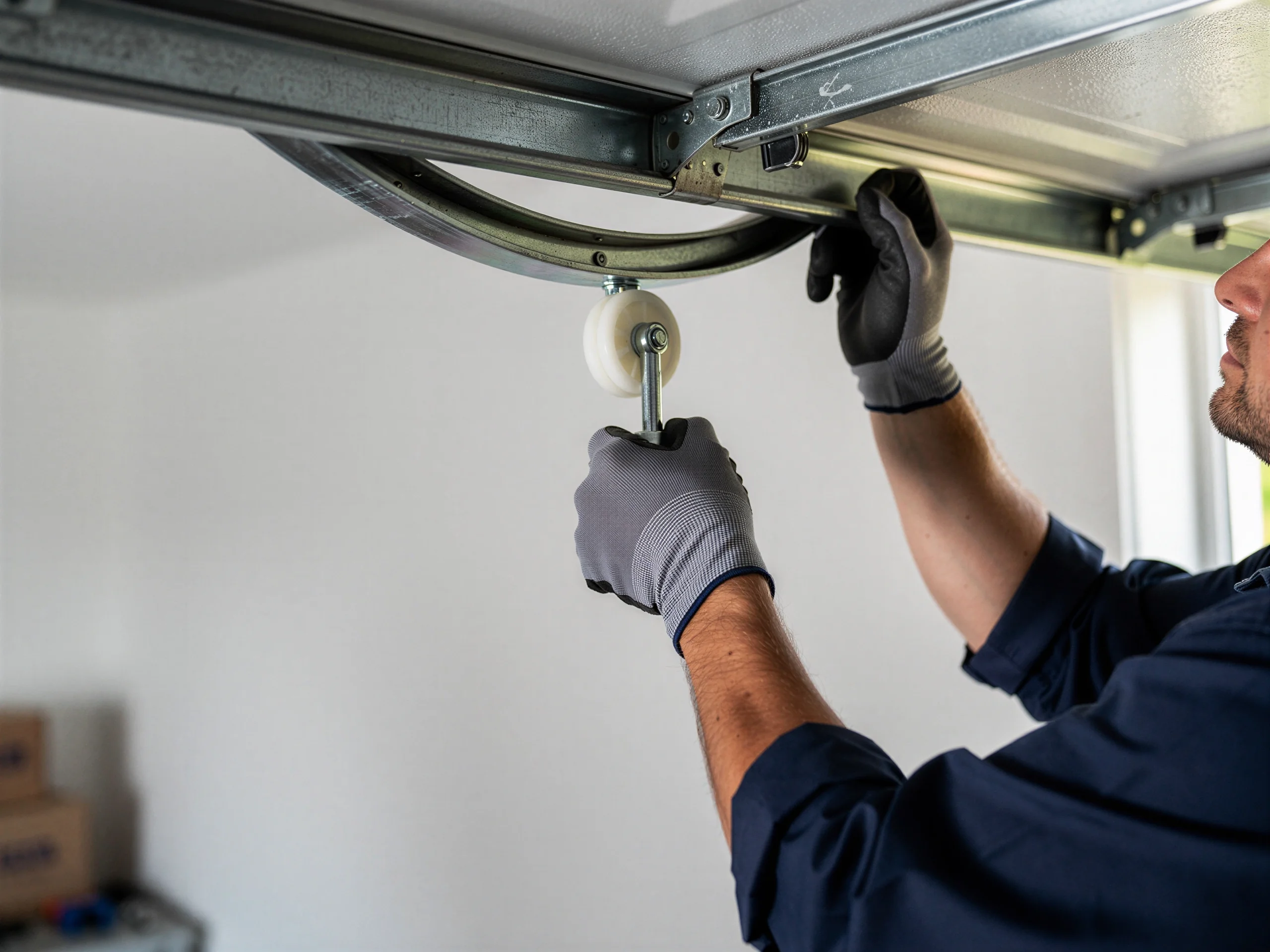
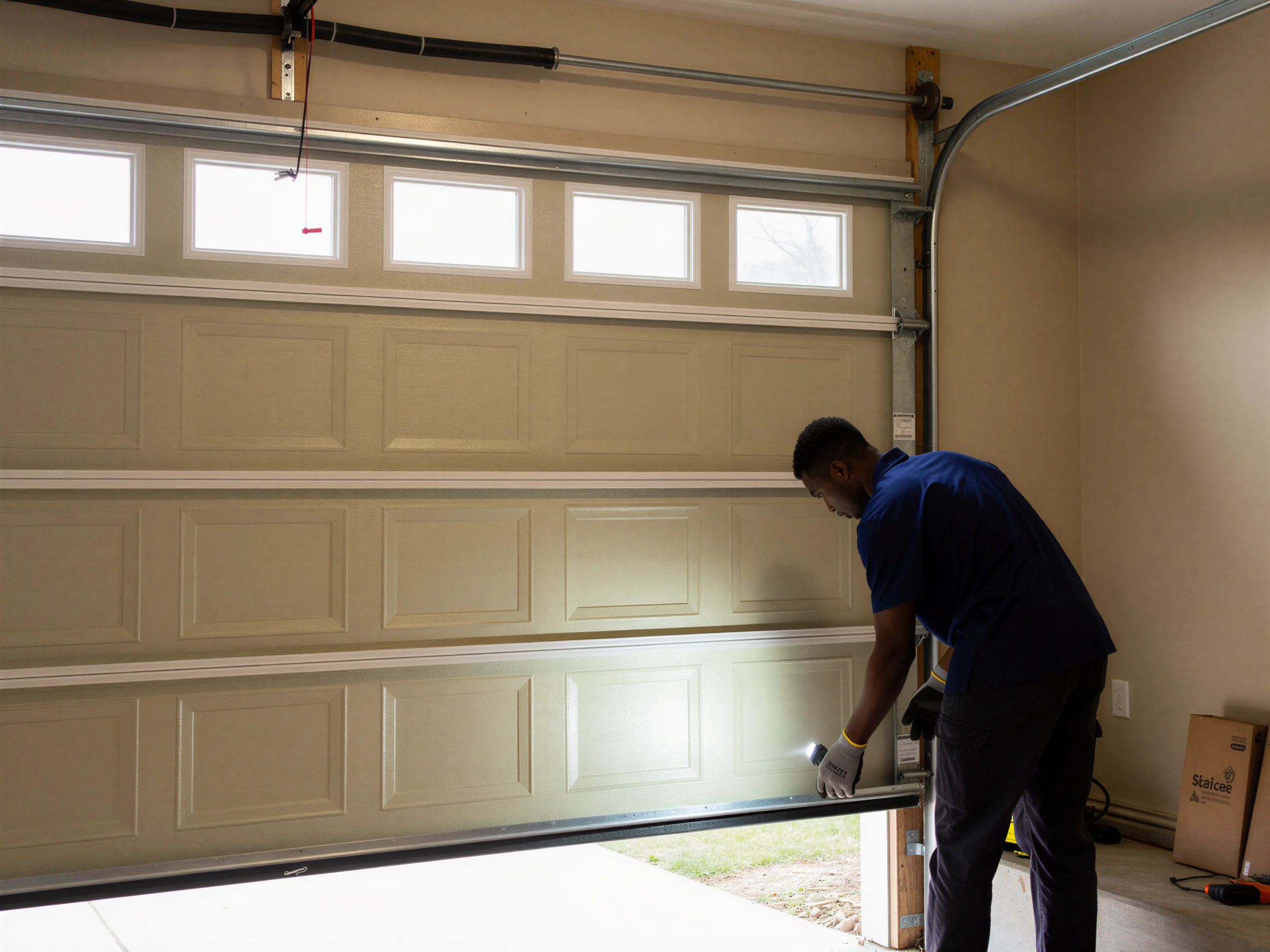
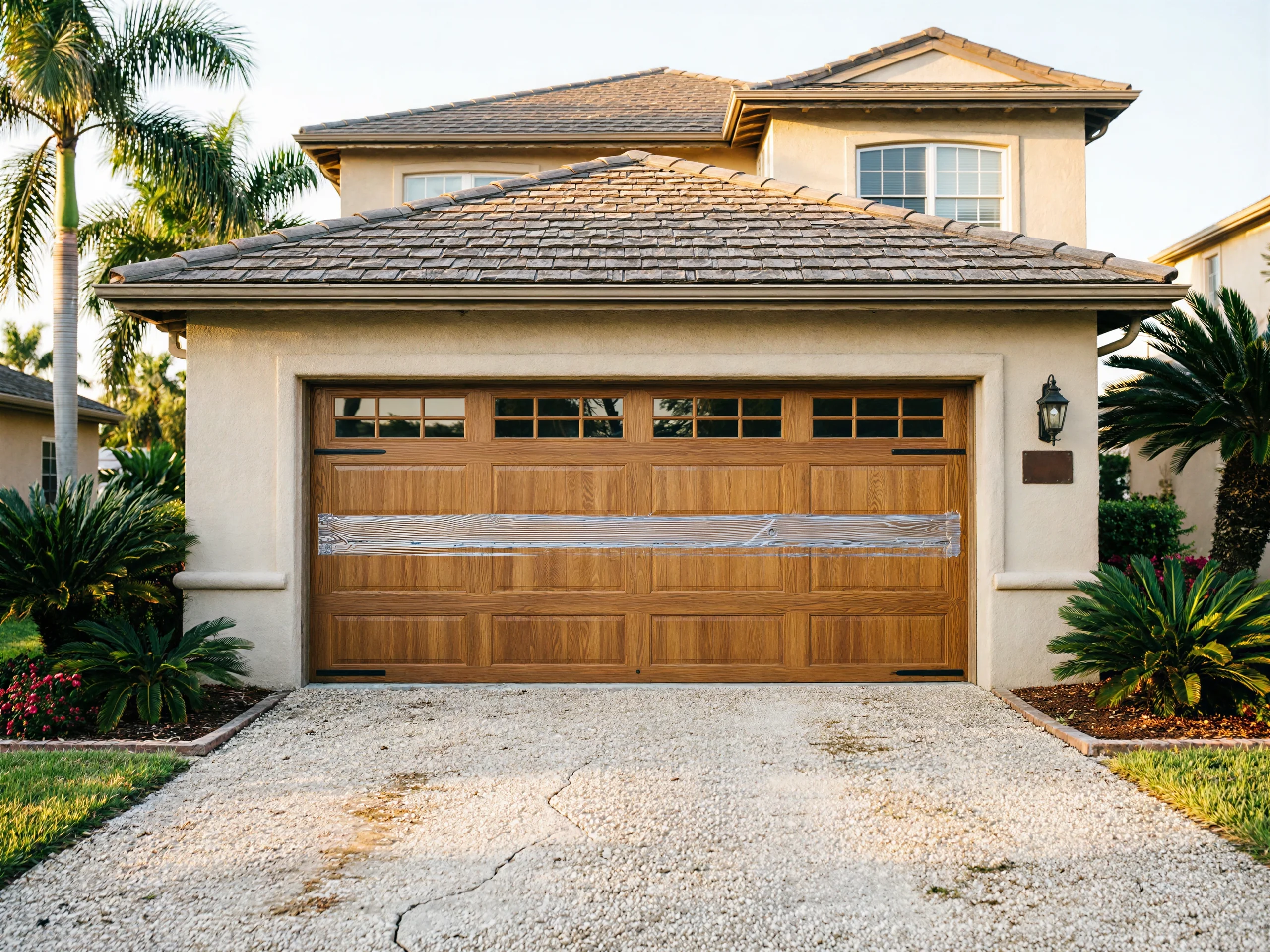
You'll see it as a door that's heavier to lift than it used to be, sections that have started to bow or dent along the bottom panel, or an opener straining against a door it was never really matched to. Sometimes it's cosmetic - faded panels, rust bleeding through at the hinges. Sometimes it's structural: tracks that have widened over the decades, rollers worn oval instead of round.
Replacement timing window
None of that means the door is unsafe today, but it does mean you're not far from a spring or cable failure on a door that's past the point where parts match anything on the shelf. Installation at this stage is less about an emergency and more about getting ahead of one, especially once you've already replaced a spring or opener on the same original door twice.
Doing It Yourself
A lot of homeowners can handle swapping weatherstripping or replacing a roller or two, and there's no reason to call anyone for that. Where it stops being a DIY job is the door itself.
Heavy door and tension
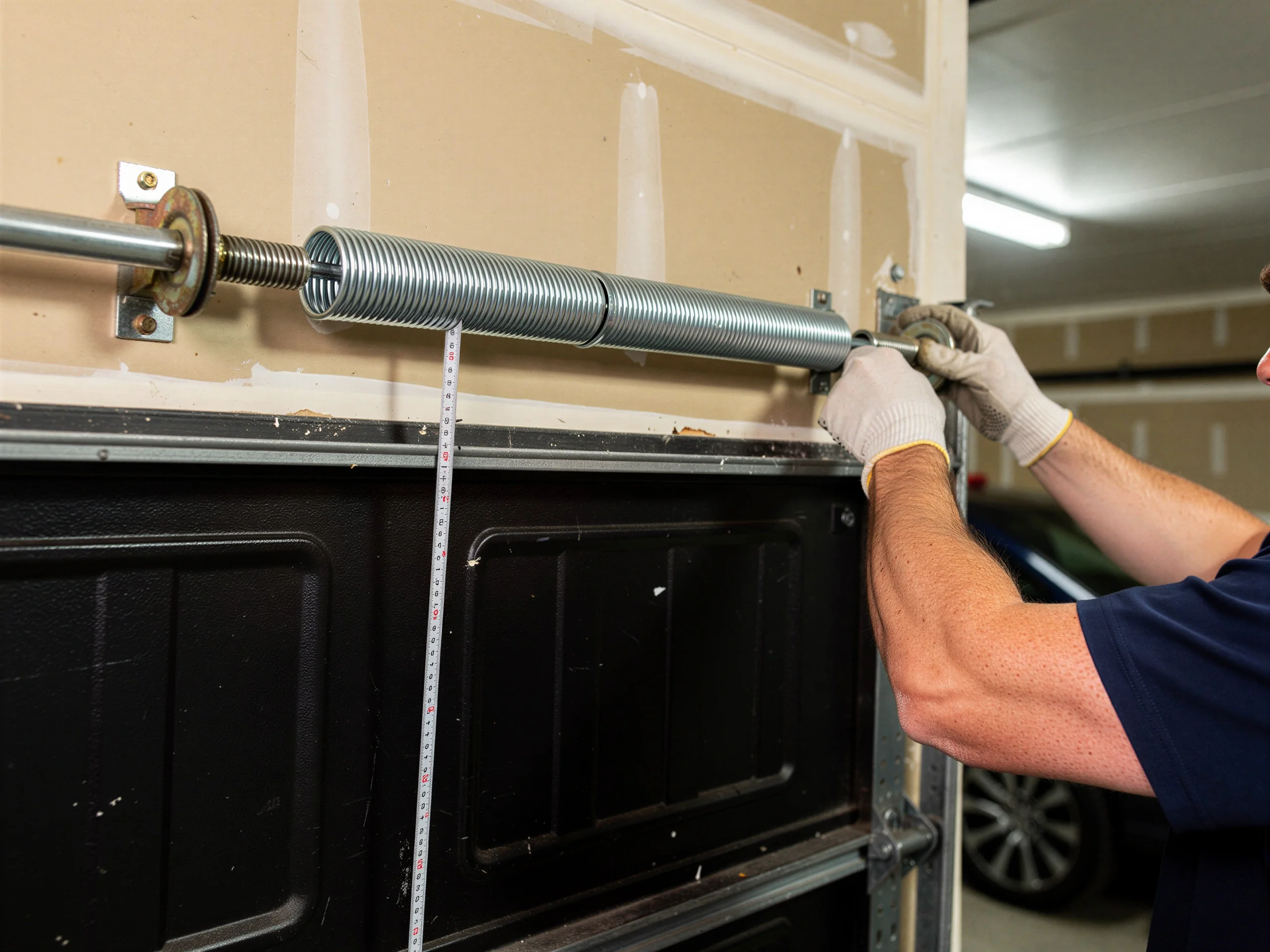
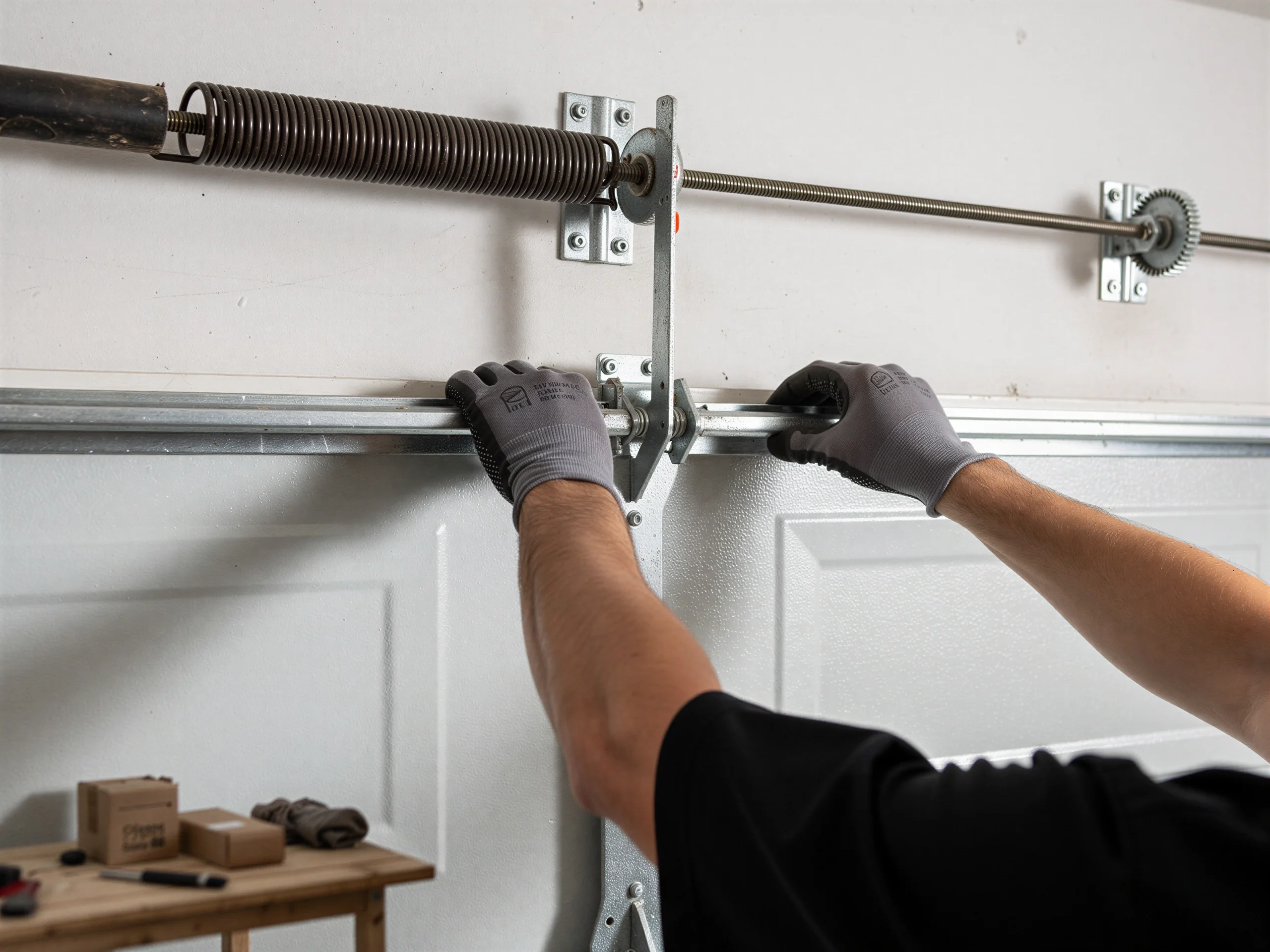
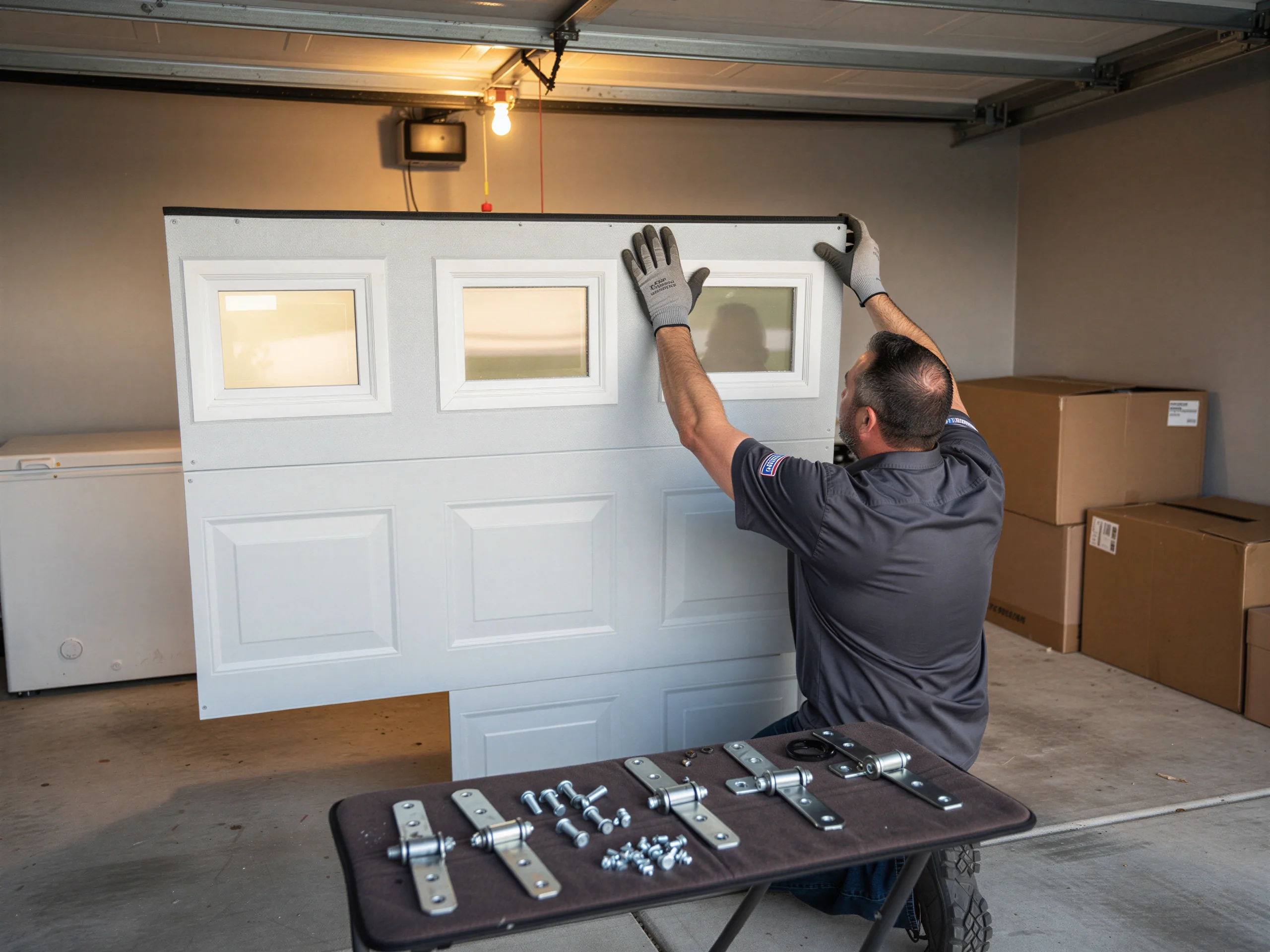
A standard double garage door section runs well over a hundred pounds, and the torsion spring that counterbalances it is under enough tension to break a hand or worse if you don't know how to wind it.
Track and travel setup
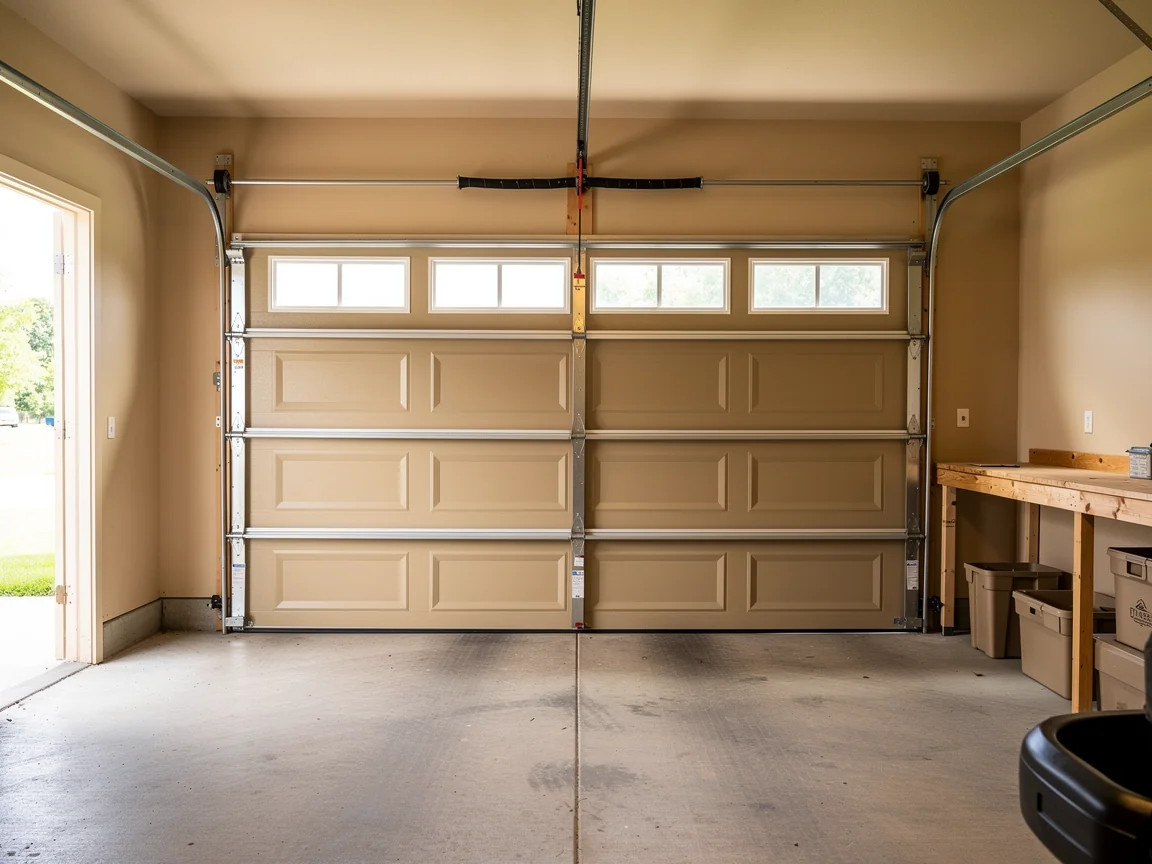
Setting the track plumb, squaring the jambs on a house that's settled over thirty or forty years, and getting the opener's travel limits dialed in so the door doesn't reverse itself or slam - that's where kits sold at the big box stores leave people stuck halfway through a Saturday with a door that won't seat right.
Trim carpentry DIY
We'll be honest: if you're comfortable with a ladder and basic tools, you can save yourself a trip charge by doing the trim carpentry around the opening yourself before we show up, and some owners do. But the door, the spring system, and the opener mounting are not where we'd recommend learning as you go. A bad install here doesn't just fail - it fails under load, with a heavy panel swinging.
What Causes It Around Here
North Port sits in a mild temperate band - no deep freeze, no snow load to design around - so the installation question here isn't about insulation against cold. It's about matching a new door to housing that was mostly built in one era. Across the service area, roughly 20,475 of the houses are owner-occupied out of about 30,957 households total, and a large share of those were framed and sided in the 1980s and 90s, per the pattern across the thirteen communities we work in. That means openings were often cut to a standard size for doors that are no longer made the same way - steel gauges have changed, track profiles have changed, and a lot of original openers were built for lighter doors than what's sold today. When we install new, we're usually resizing hardware mounts, sometimes shimming a jamb that's shifted slightly over four decades, and matching spring tension to a door that may be a different weight than the one it's replacing. The climate doesn't drive the failure here - the age of the original build does.
What the Repair Takes
A straightforward installation on an opening that's already square and properly framed is mostly a one-visit job: old door and track out, new door, track, and springs set, opener remounted or replaced, and the balance tested under load before we leave.
Jamb carpentry on older homes
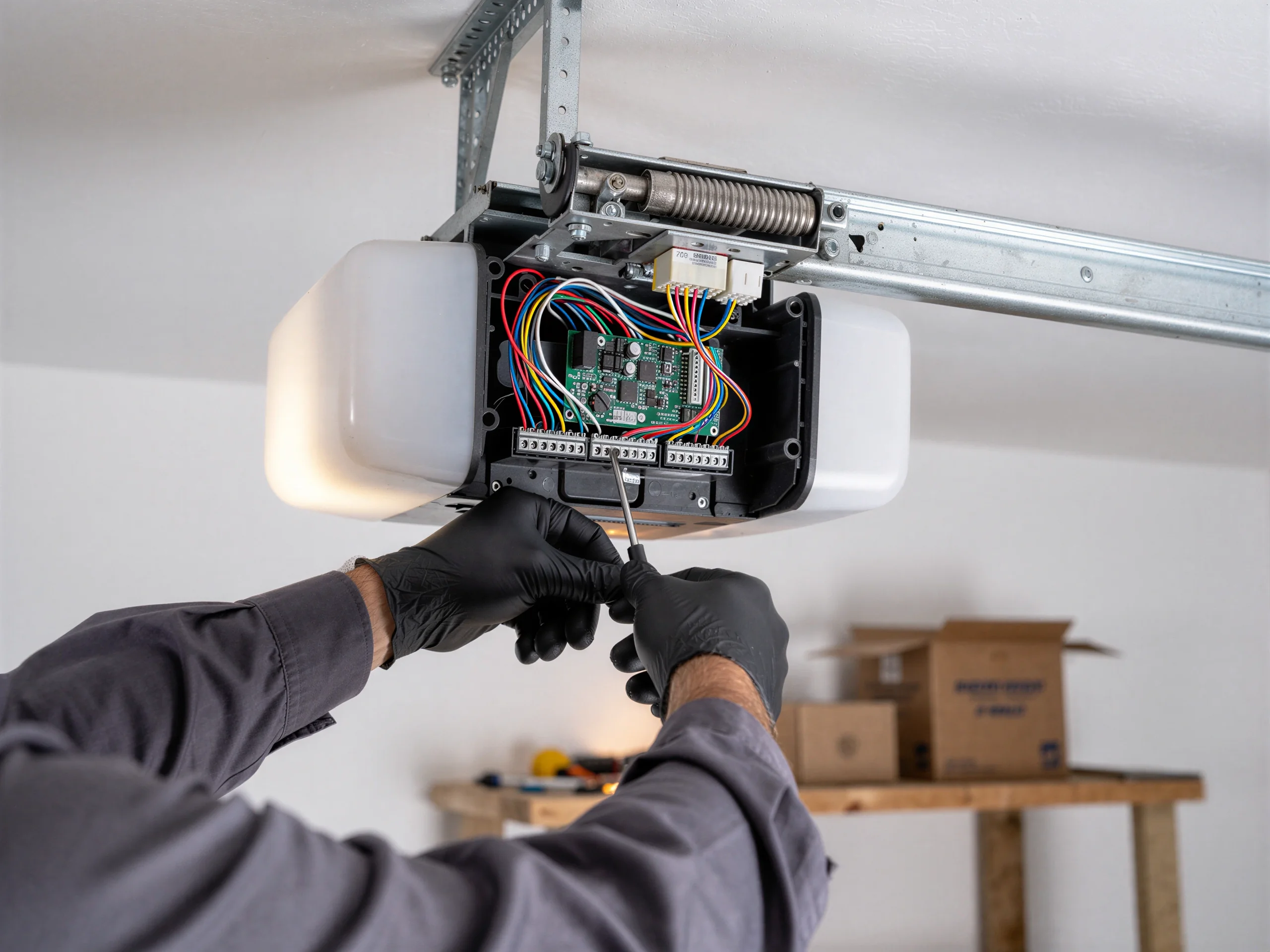
Where it runs longer is when the jamb needs real carpentry - not uncommon on a house built in the 70s or early 80s where the original framing has moved a little - or when the homeowner is going from a single layer door to an insulated one and the opener needs to be upsized to handle the added weight.
No mismatched openers
We don't install a mismatched opener on a heavier door just to save a trip back out; that's the kind of shortcut that comes back as a call six months later.
Out-of-square openings
One honest limit: if the opening itself is out of square beyond a certain point, or the header above it isn't sound, that's a carpentry or structural fix first, and we'll say so rather than force a door into a frame that isn't ready for it.
Talk to a local pro
Garage door service in North Port?
Same-day service with honest, upfront quotes.