How It Shows Up
A bad panel usually starts as a dent from a bumper tap or a trash can, then turns into something worse. On steel doors from the 1980s and 90s, a dent creases the metal and the seam next to it starts to separate from the panel above or below it.
Thin aluminum cracking
On the thinner aluminum doors that came standard on a lot of builder-grade homes in this stretch of Florida, a hard knock can crack the skin outright rather than just dent it. You'll notice it before you see it, usually. The door starts to bind on the track right where the bad panel sits, or it shudders instead of gliding when the opener pulls it up.
Bottom panel water staining
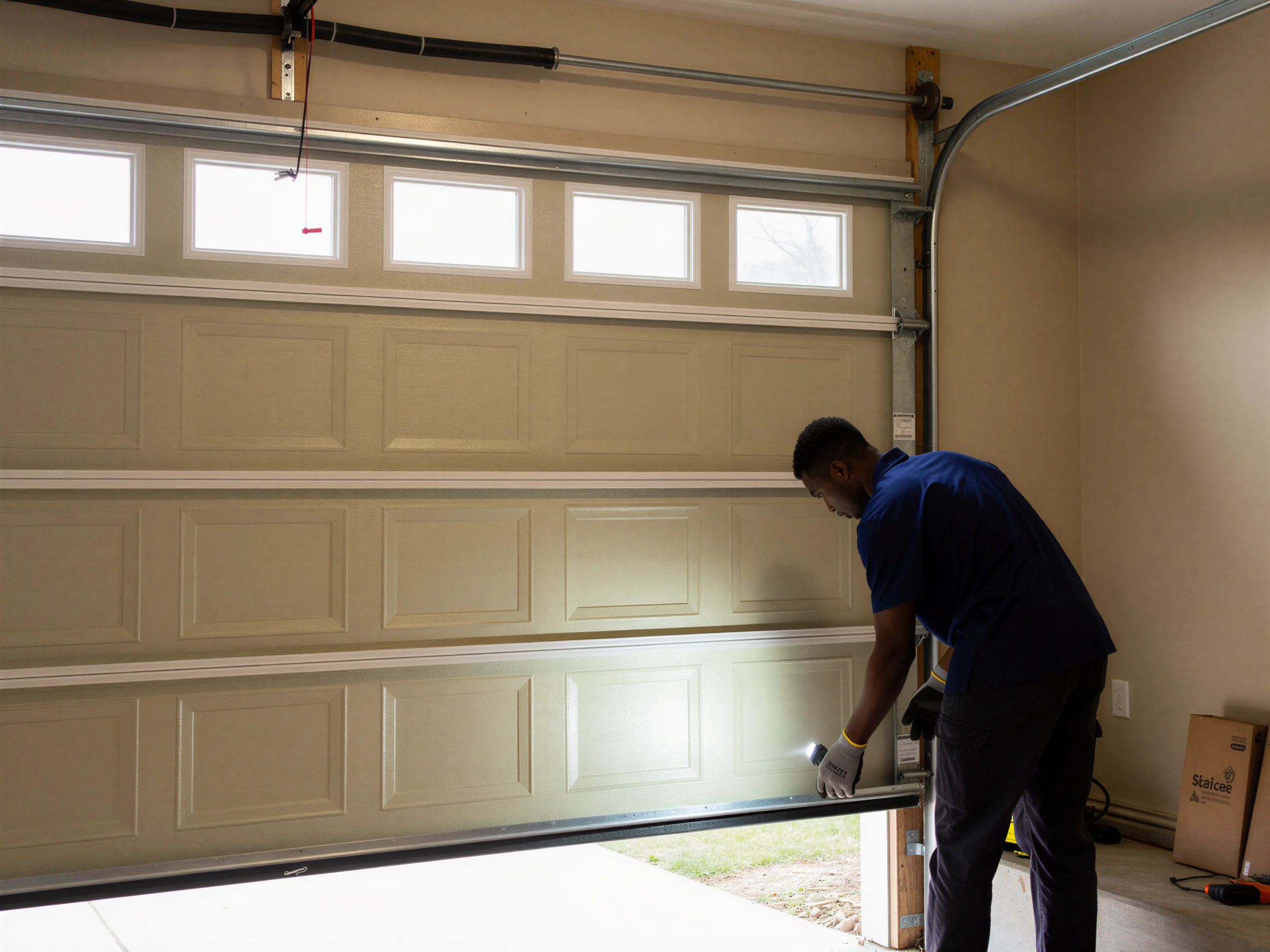
If the bottom panel is the one that's gone, you'll see daylight or water staining along the bottom edge after a storm. If it's a middle panel on a double-wide door, the whole section can bow outward enough that the rollers start walking out of the track groove.
Faded paint corrosion
Sun exposure speeds this along. Faded, chalky paint on a panel is a sign the finish has given up, and once that happens, the steel underneath corrodes faster at any ding or scratch. A single bad panel rarely stays a single bad panel for long if the door keeps running that way.
Doing It Yourself
A shallow cosmetic dent, something you can still see your reflection in around the edges, you can sometimes pull out with a suction cup kit or even a plunger and some patience.
Dent popping versus replacement
That's a real fix for a real problem, and there's no reason to pay someone for it. Where DIY stops making sense is once the panel's seam has separated, the steel has cracked, or the section is bowed enough to bind the rollers.
Matching panel dimensions
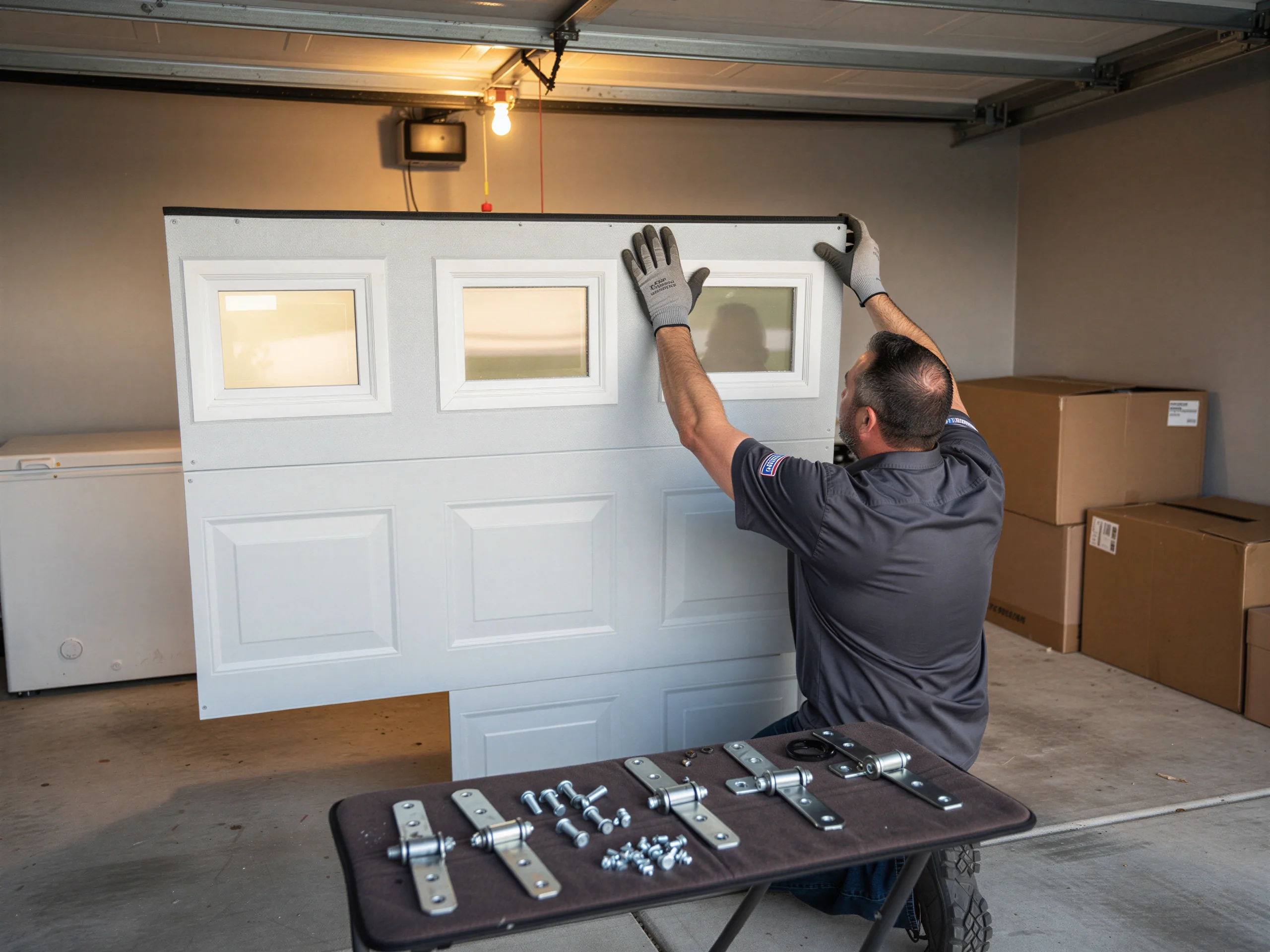
At that point you're not popping a dent, you're replacing a structural piece of the door, and that means matching panel height, section color, and hinge spacing to a door that may be twenty or thirty years old. Garage door manufacturers change panel profiles over the years, so a 2023 panel often will not bolt onto a 1986 door even if the brand is the same.
Spring tension hazard
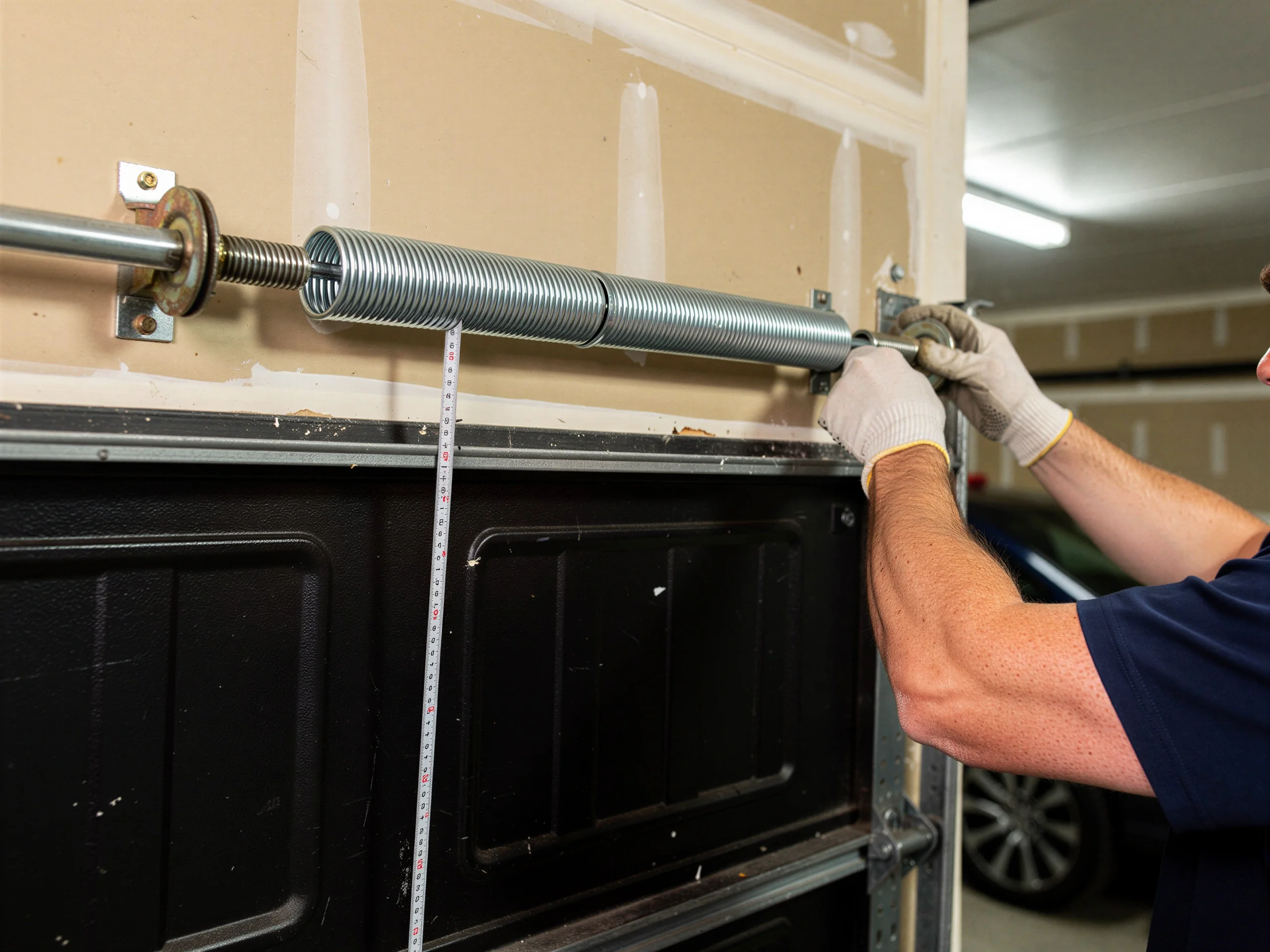
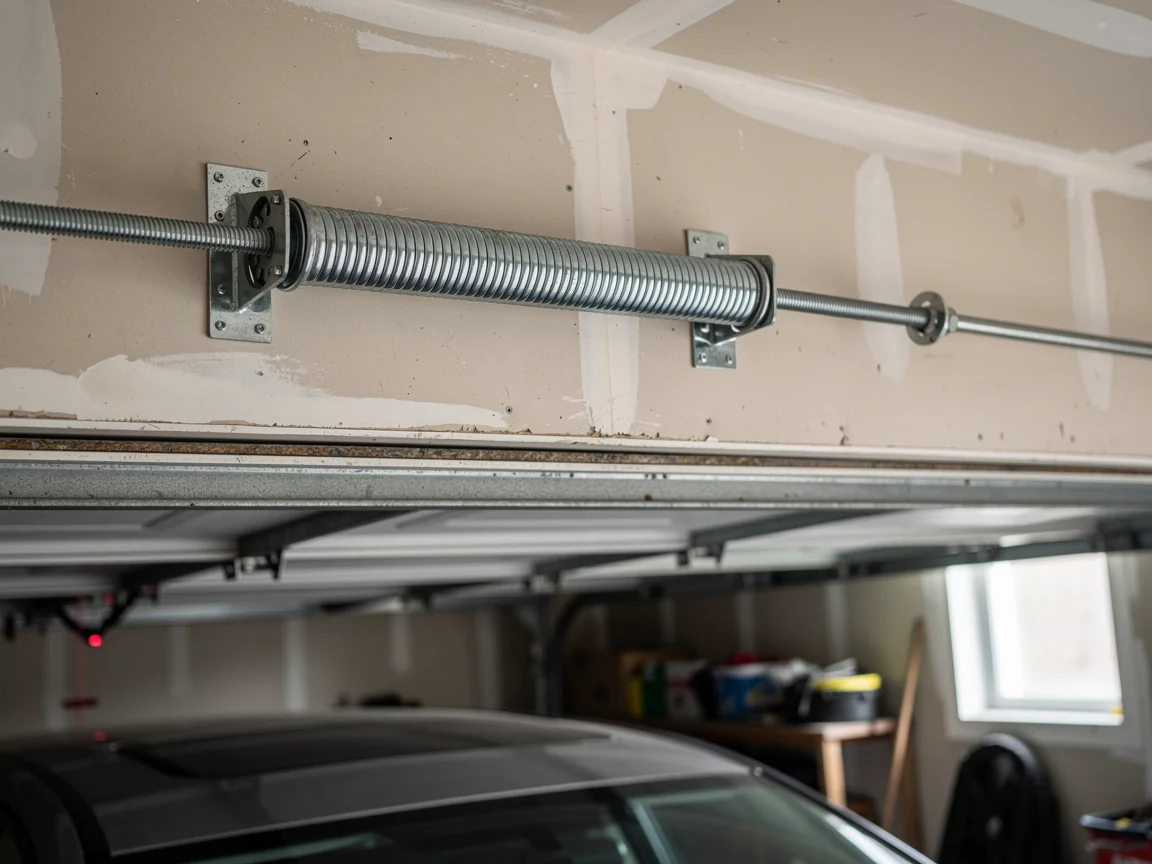
We'll say plainly: if you're not comfortable taking spring tension off a section before you unbolt it, don't start this job. A torsion spring under load has put people in the hospital. If the dent is cosmetic, go ahead and try the suction cup. If the panel is structurally compromised, that's a call, not a weekend project.
What Causes It Around Here
Housing stock across this service area runs 1968 to 2003, with the median build year sitting around 1983, and that matters for panels specifically. Doors from that era, across the thirteen communities we work in, were built to the lighter-gauge steel and aluminum standards of the time, before manufacturers thickened panel skins to handle wind load better. A dent that would barely mark a modern door can crease a 1980s-era panel edge to edge.
The mild temperate climate here doesn't put the door through freeze-thaw cycling, so you won't see the frost-heave damage that cracks doors up north. What you do see instead is UV and humidity fatigue on paint and seals, which weakens the panel skin at the seams over enough years, and sets up exactly the spot where a minor impact turns into a real crack. Combine thirty-plus-year-old steel with sun-baked seams, and the ordinary bumps of daily life, backing out trash cans, a bike handlebar, a ladder leaned against the door, do more damage here than they would on a newer, thicker door.
What the Repair Takes
A single-panel swap on a sectional door usually takes less time than most homeowners expect, once the right panel is in hand. The slow part isn't the labor, it's finding a matching section for a door that's been in service since the 1980s or 90s.
Discontinued profile sourcing
Some manufacturers have discontinued the exact profile, color run, or hinge spacing used on older doors, which means the real lead time is sourcing a panel that fits, not installing it.
Custom panel cost limits
We'll tell a customer honestly when a match isn't available and replacing the full door is the more sensible move, rather than quoting a custom-order panel that costs nearly as much as a new door section by section.
Cheaper repair checked first
With 20,475 owner-occupied houses across this area and a median household income of $60,885, most owners want the lower-cost repair when it's a real option, and we'll always check for that option first before recommending a full door.
Talk to a local pro
Garage door service in North Port?
Same-day service with honest, upfront quotes.