Local detail
The Problem
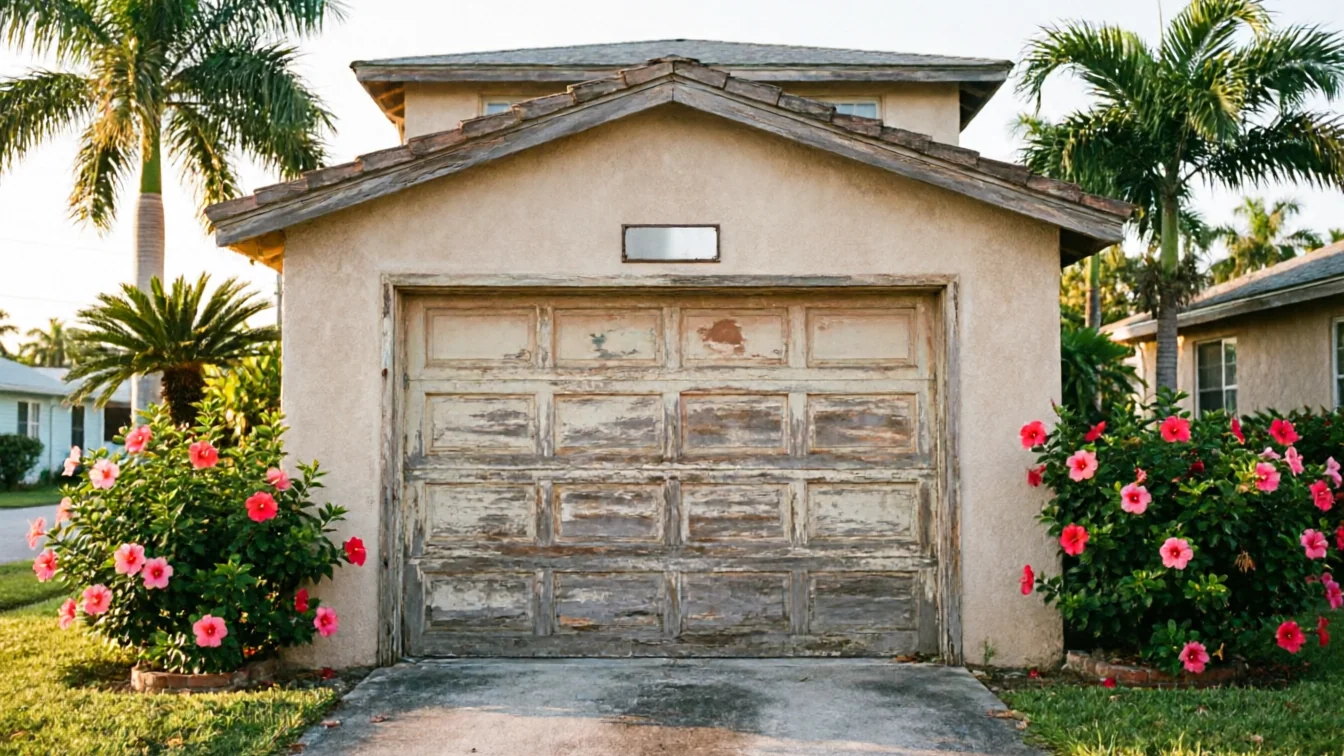
Most houses in North Port went up between 1968 and 2003, with the median build year around 1983, and that holds across the thirteen named areas from Warm Mineral Springs out to Osprey. A lot of those garages still have the torsion spring that came with the house. Steel fatigues on a cycle count, not a calendar, but cold makes steel more brittle right when the spring is already near the end of its life. You don't notice a spring getting old. You notice it when it's gone - a bang in the garage, a door that won't budge, or a door that comes down fast and hard because the spring that was supposed to carry the weight is lying in two pieces on the floor.
The spring isn't guessing games either. A standard torsion spring on a door this age is rated for a cycle count, and a door opened and closed twice a day for thirty-plus years has usually burned through most of it already. Cold just picks the morning.
The area
When It Stops Being a DIY Job
A broken torsion spring is not a bolt you tighten. The spring is wound under load, and the bar it's wound around is holding the full weight of the door - on a lot of these older North Port doors, that's a heavy wood or early steel panel door, not the lighter stock you'd get today. Unwinding or rewinding that bar with the wrong tools, or no winding bars at all, has put people in the ER. If the door is stuck halfway, or the spring has already separated, leave it alone and call it in.
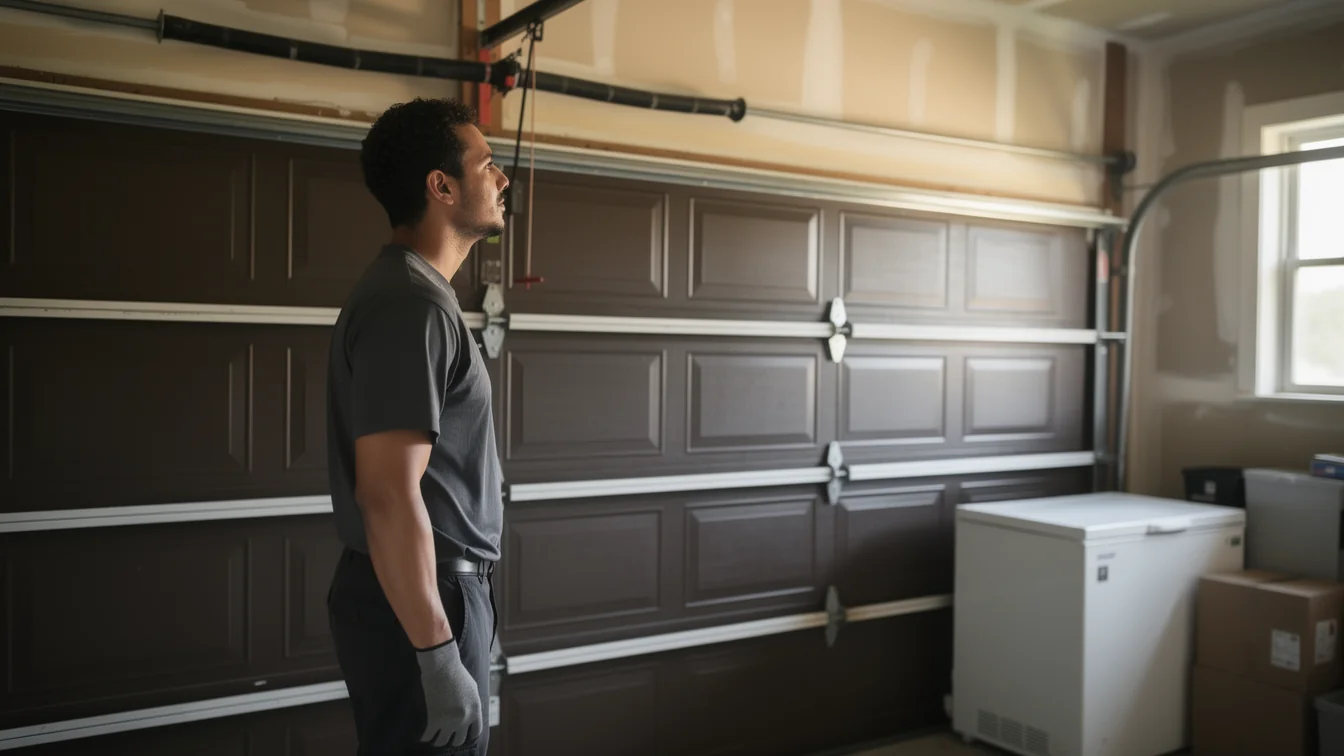
Where a homeowner can reasonably step in: checking whether it's the spring or the opener (pull the emergency release, try lifting the door by hand - if it feels like dead weight, it's the spring), and checking the tracks and rollers for anything obviously bent or off the rail. Past that, you're into cable tension and spring winding, and that's where this stops being a Saturday project.
What we find
What the Weather Here Does to It
North Port sits in a mild temperate band - we don't get the deep freezes that work-harden steel the way a northern winter does. That's the good news. The bad news is it cuts the other way: a spring here rarely gets exercised by real cold, so when a cold snap does roll through, it's hitting steel that's had thirty-plus years of Florida humidity and heat cycling, not steel that's been tempered by regular winters. The metal contracts, the lubricant most owners never reapplied has long since gone gummy, and a spring that was already down to its last few hundred cycles finishes the job on the one cold morning of the year.
Humidity is the other half of it. Thirty-plus years in this climate means more surface rust on an unmaintained spring than you'd see in a drier part of the country, and rust pits weaken the coil before cold ever touches it. The two conditions compound - it's not one or the other.
How we work
What to Check
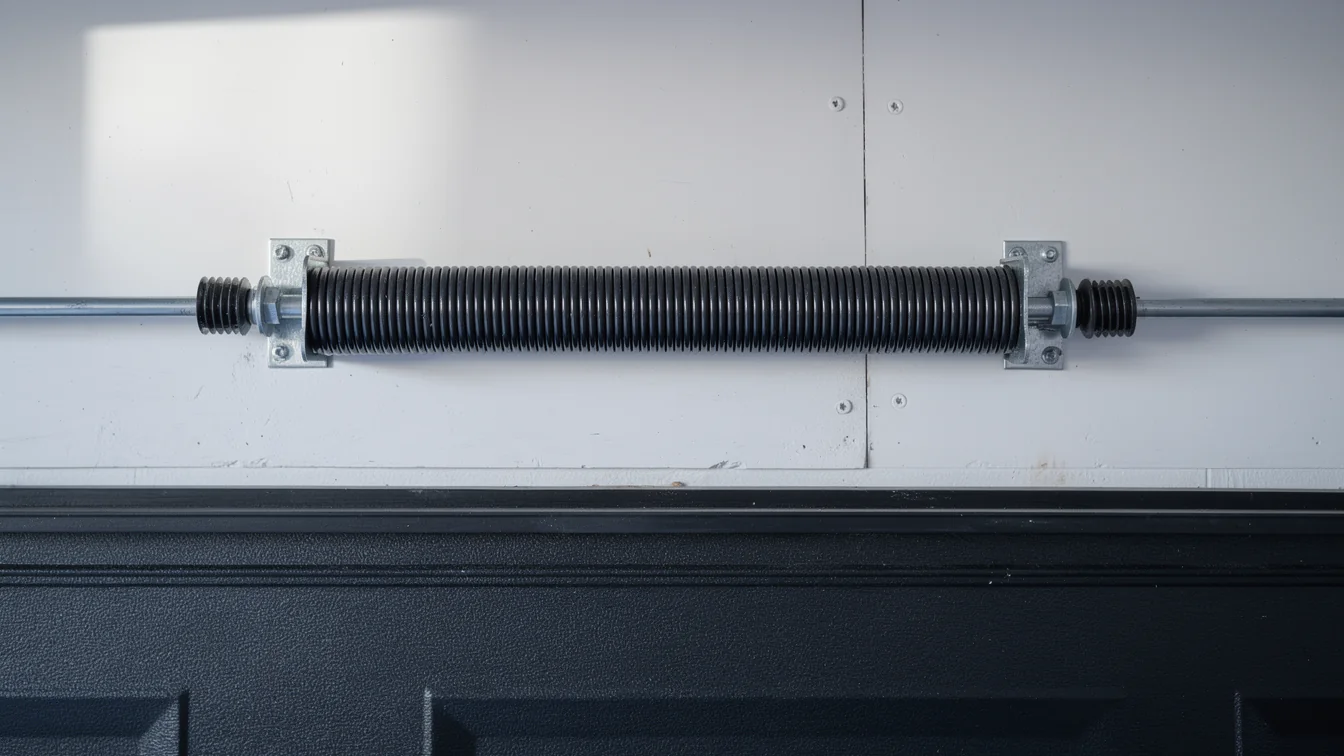
If your door is original to a house built anywhere in that 1968-2003 range - which covers most of the service area from Warm Mineral Springs through South Venice and out to Osprey - look at the spring itself. A gap in the coil, visible rust, or a spring that looks stretched compared to its mate on a double door are all signs it's close to the end. Listen for a creak or pop when the door runs that wasn't there before.
We can't tell you the exact age of your spring without looking at it, and we won't quote a repair over the phone sight unseen - too much of this depends on the door's weight and the hardware behind it. What we can say: on a house from this era, if nobody's replaced the spring yet, it's overdue, cold weather or not.
Talk to a local pro
Garage door trouble in North Port?
Same-day service with honest, upfront quotes.