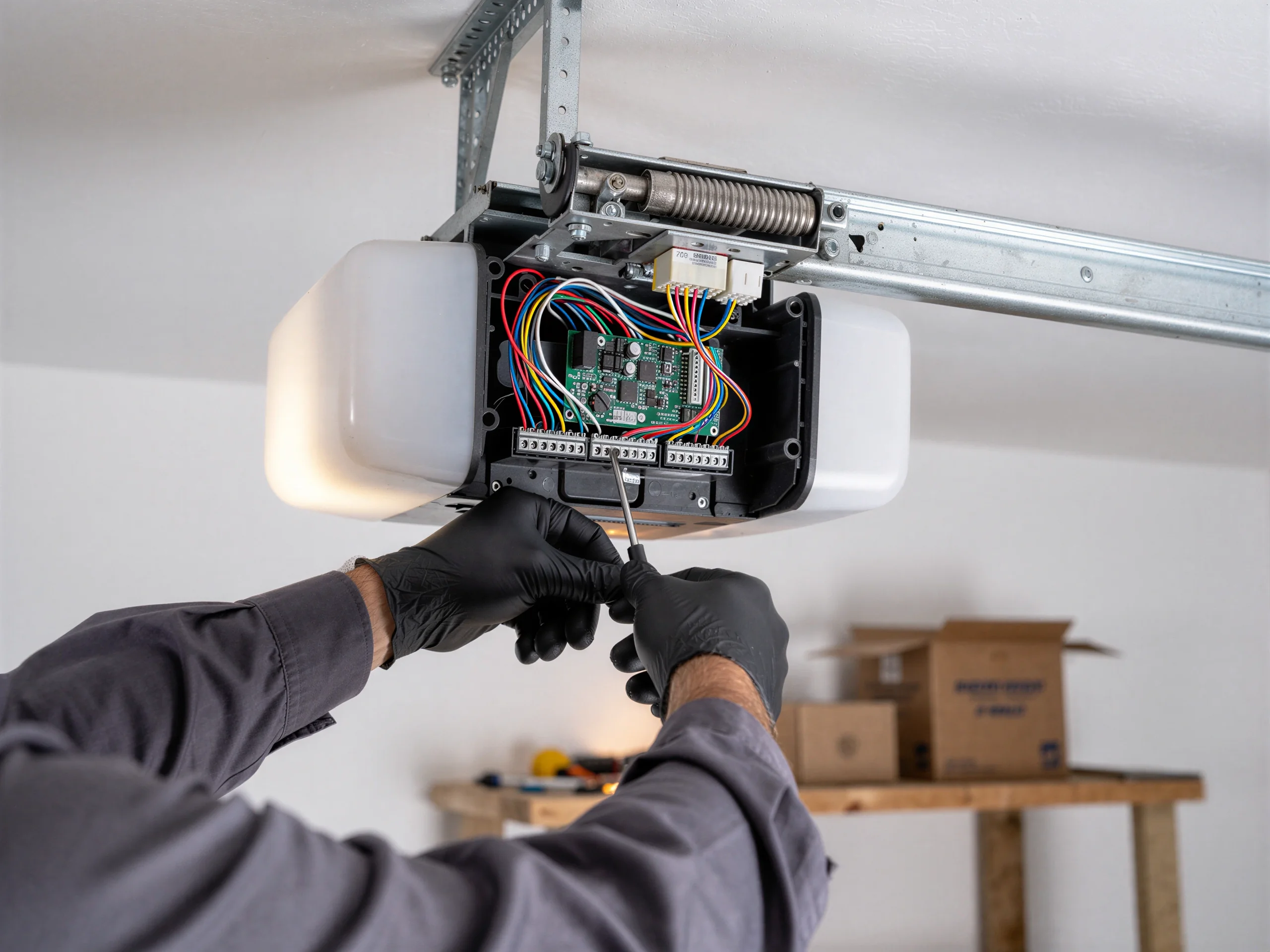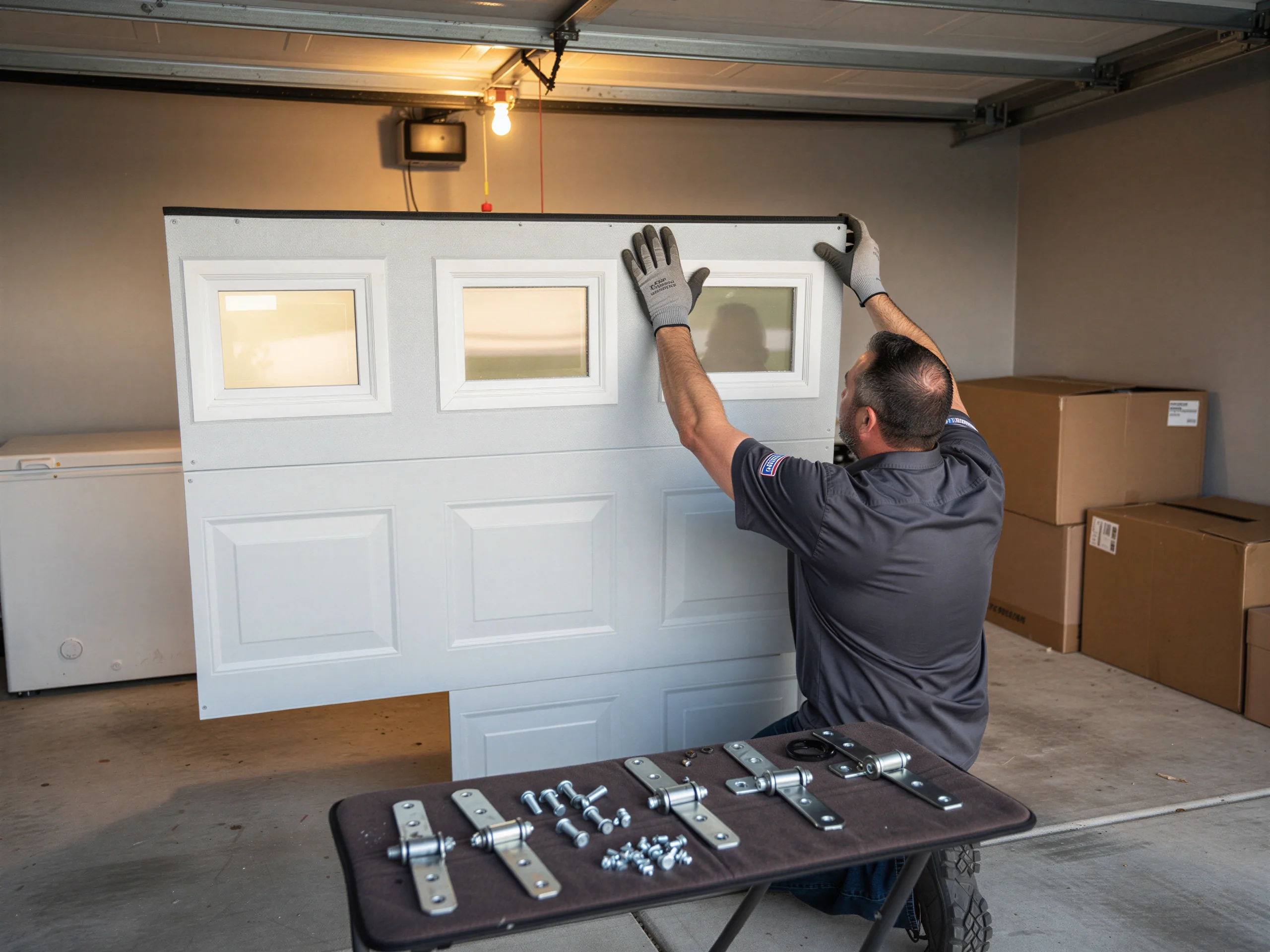
How It Shows Up
The most common sign is a door that won't budge, or one that budges and then slams. If you pull the emergency release and try to lift the door by hand and it feels like it weighs three hundred pounds, the spring is doing none of the work it used to.
Bang and coil gap
Other signs: a loud bang from the garage (that's the spring letting go, usually at 2am for some reason), a visible gap in the coils above the door, or the door opening a few inches and reversing because the opener senses the imbalance and won't fight it.
Typical 1983 homes
Most of the houses we get called to were built somewhere in the 1968 to 2003 run that makes up the bulk of the area's housing stock, with a lot of them sitting right around 1983.
Cycle-rated springs fail
A torsion spring is rated for a set number of open-close cycles, and once a door hits that number, it doesn't matter how well it was installed. It just lets go. If your house is from that era and nobody's touched the spring since, you're in the window where failure gets common, not rare.
Doing It Yourself
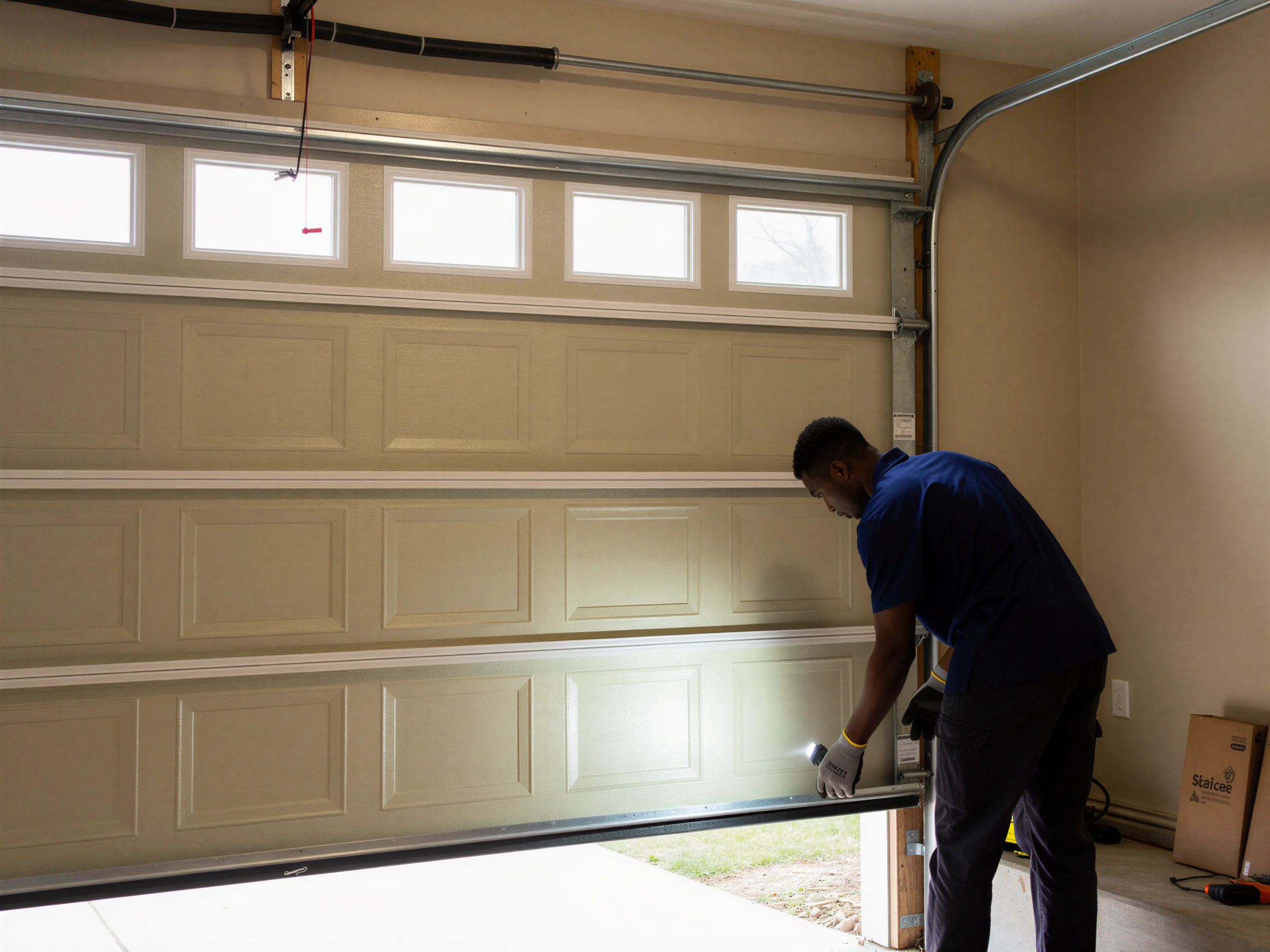
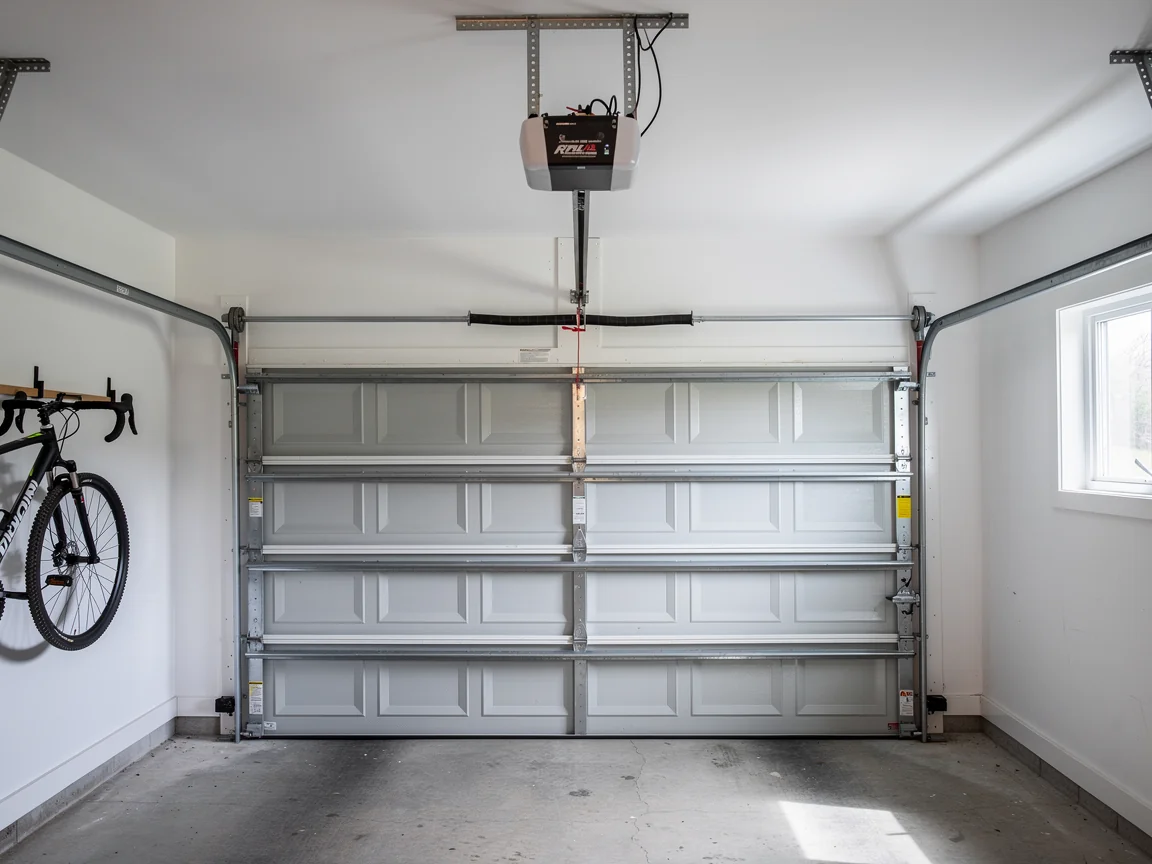
There's a few things you can safely check yourself. Look at the spring above the door - if you see a clean gap in the coil, that spring is broken and the door isn't getting opened again until it's replaced. You can also disconnect the opener and lift the door by hand to see how balanced it feels; a door that's hard to lift or won't stay open on its own at waist height is telling you the spring has lost tension even if it hasn't snapped.
What you shouldn't do is open the spring itself. Torsion springs are wound under several hundred pounds of tension, and winding or unwinding one without the right bars and a way to lock it down has put people in the hospital. This isn't a YouTube-and-a-Saturday job the way swapping a roller or tightening hardware can be. If the spring's gone, that's a call, not a project.
What Causes It Around Here
Two things line up here that drive spring failures across the service area. First is age: most homes run 1968 through 2003, median around 1983, and across the area's roughly 20,475 owner-occupied houses, a lot of them never had the original spring swapped out. Springs don't last forever regardless of climate - they fatigue with cycles, and a 40-year-old spring has had 40 years of cycles.
Second is the climate itself. We're in a mild, temperate band, not a place that sees the hard freeze-thaw swings that crack steel up north. That actually helps spring life in one way - no cold-snap snapping. But the trade-off is humidity and salt-laced air working into the coil coating year-round, which corrodes the wire from the outside in even while the spring still looks intact. A rusted spring fails without warning more often than a clean one does, because the rust hides the wear.
What the Repair Takes
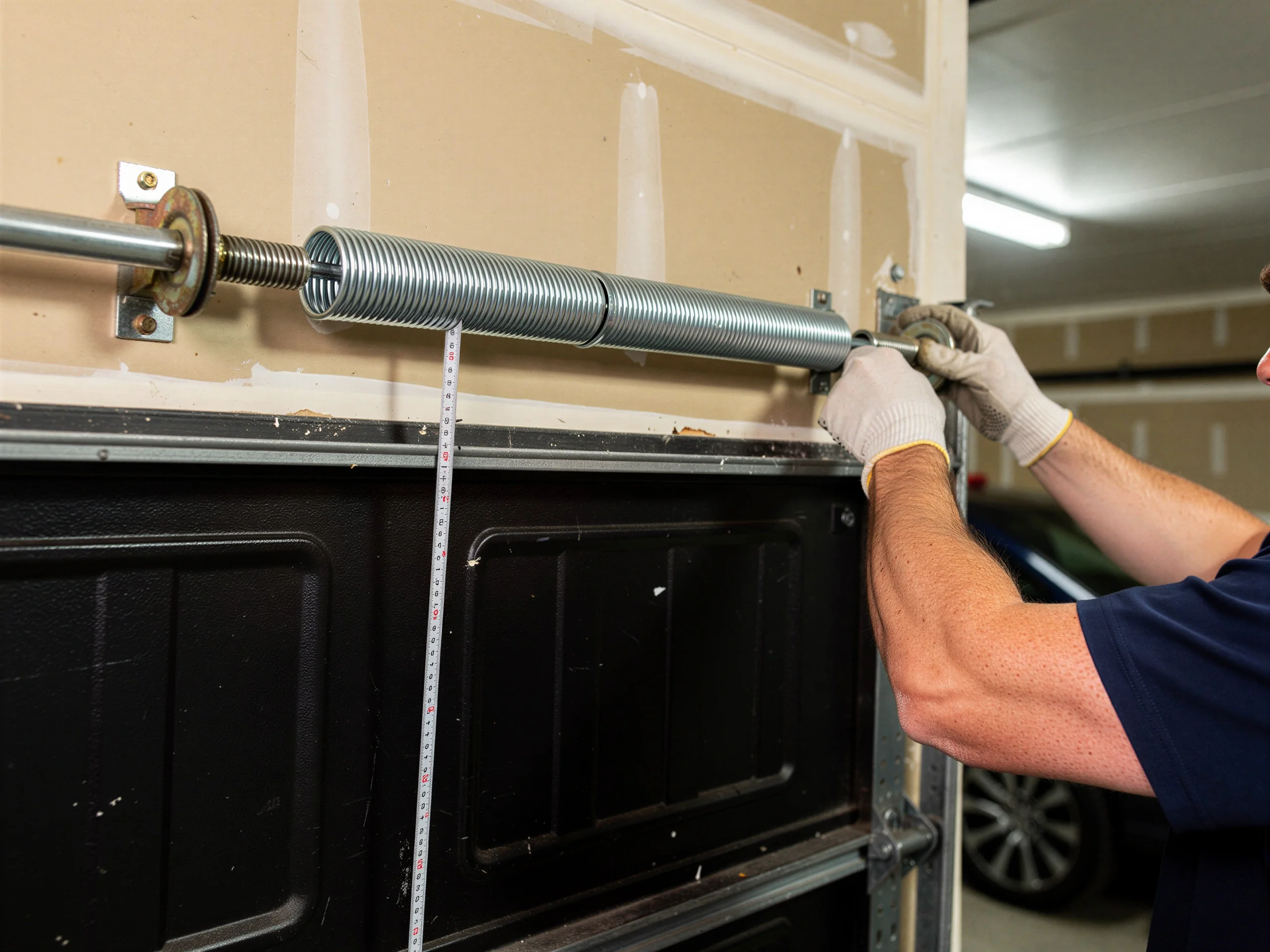
A spring repair starts with measuring the broken one - wire diameter, coil length, inside diameter - because a spring that's close but not matched will throw the door's balance off and wear the opener out early.
Rated spring and cables
We replace the spring with one rated for the door's weight and cycle count, swap the safety cables if they're worn, and lubricate the torsion bar and bearings while it's open.
Bent track limits fix
One honest limitation: if the track is bent or badly rusted, or a panel is cracked from years of being forced open while out of balance, a new spring alone won't fix the door. At that point we'll tell you straight that replacement is the better money, not patch a door that's already failing somewhere else.
Spring sizes not stocked
We don't stock every spring size on the truck for every door built since the 1960s, so some jobs need a part ordered rather than fixed same-visit - we'll tell you up front if that's the case.
Talk to a local pro
Garage door service in North Port?
Same-day service with honest, upfront quotes.