Doing It Yourself
A garage door spring holds a lot of stored force, and on a door built around 1984 - which is the median build year for homes out here - that spring has usually never been swapped.
Four-decade original coil
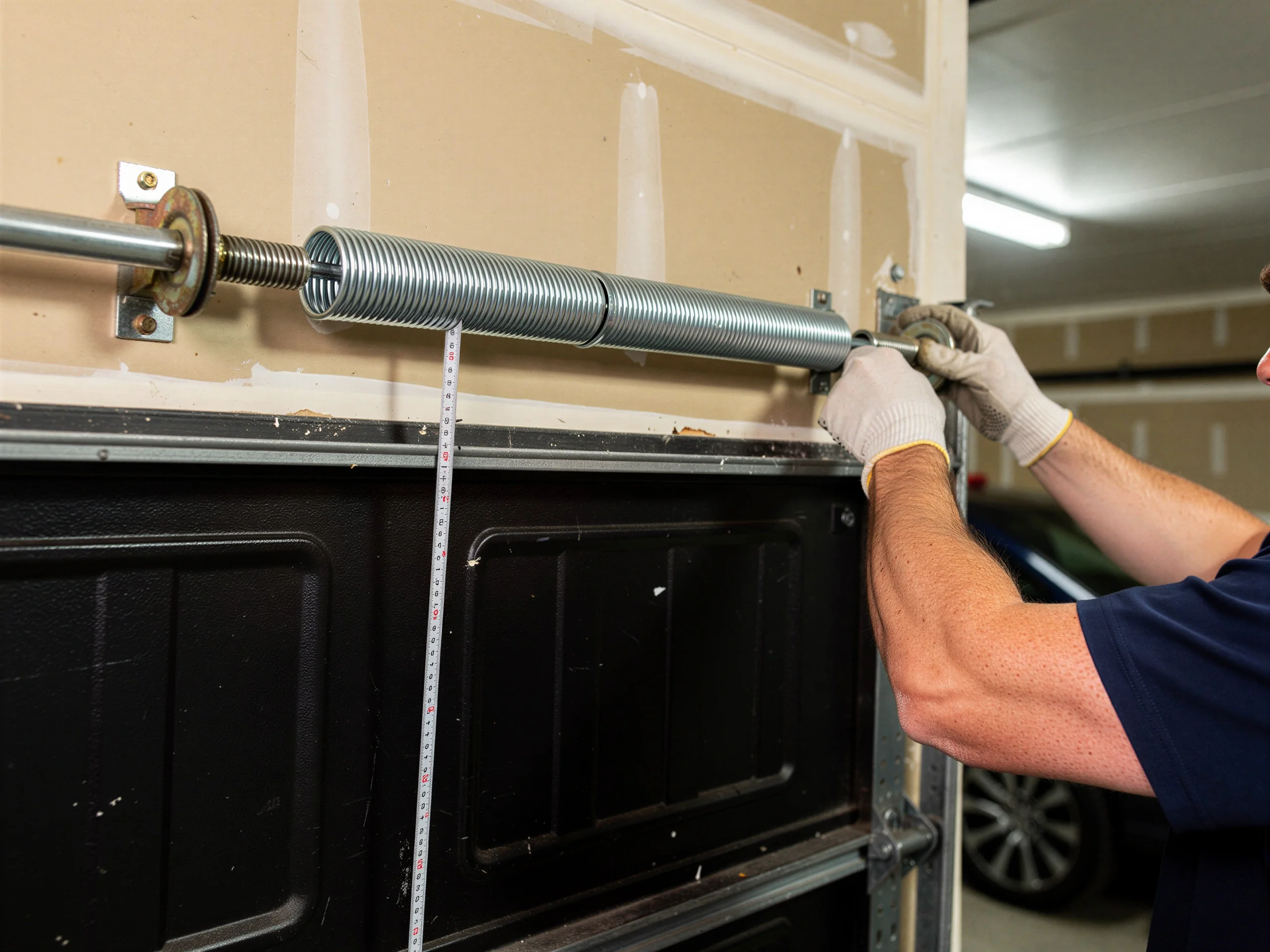
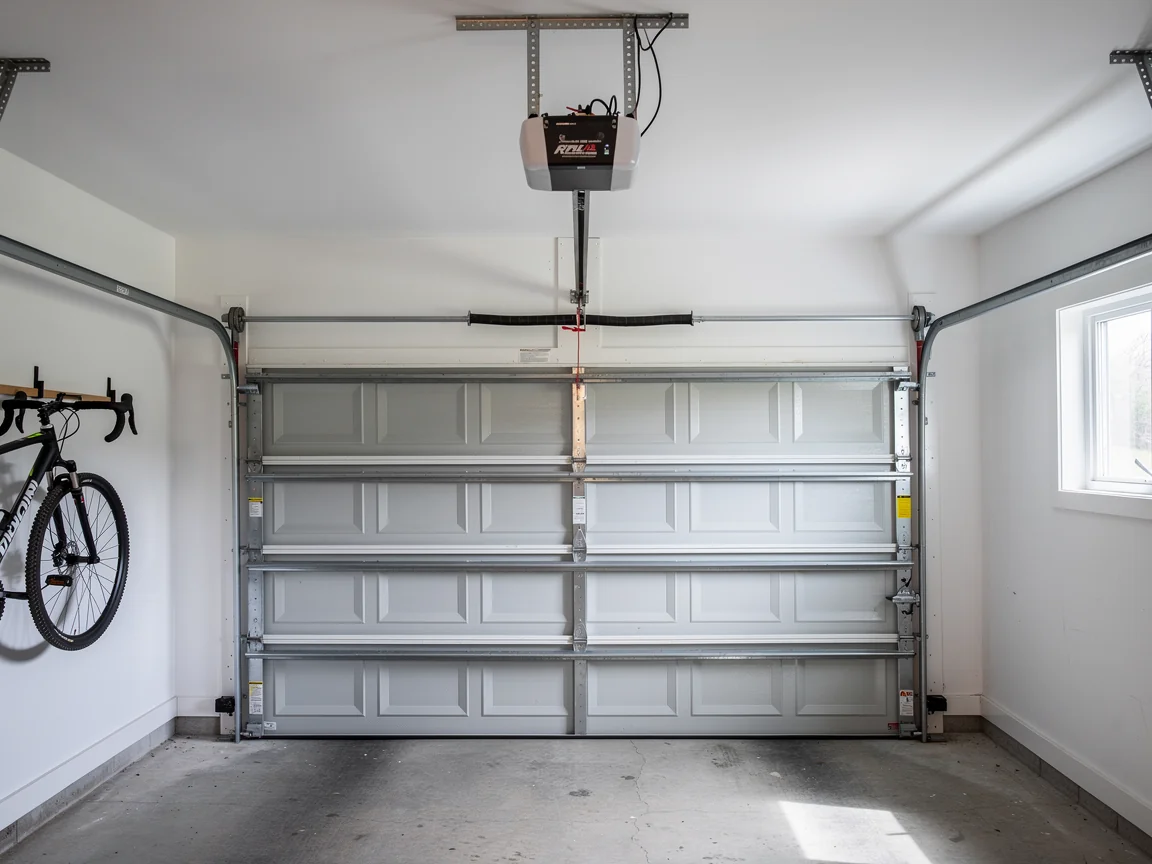
That's close to four decades on the same coil. If it's still original, the winding cone, the end bearing plate, and the cable drums are probably original too, and all of that metal has fatigued together. You can see a broken spring from across the garage: a gap in the coil, or the door sitting crooked when the opener tries to lift it.
No DIY winding
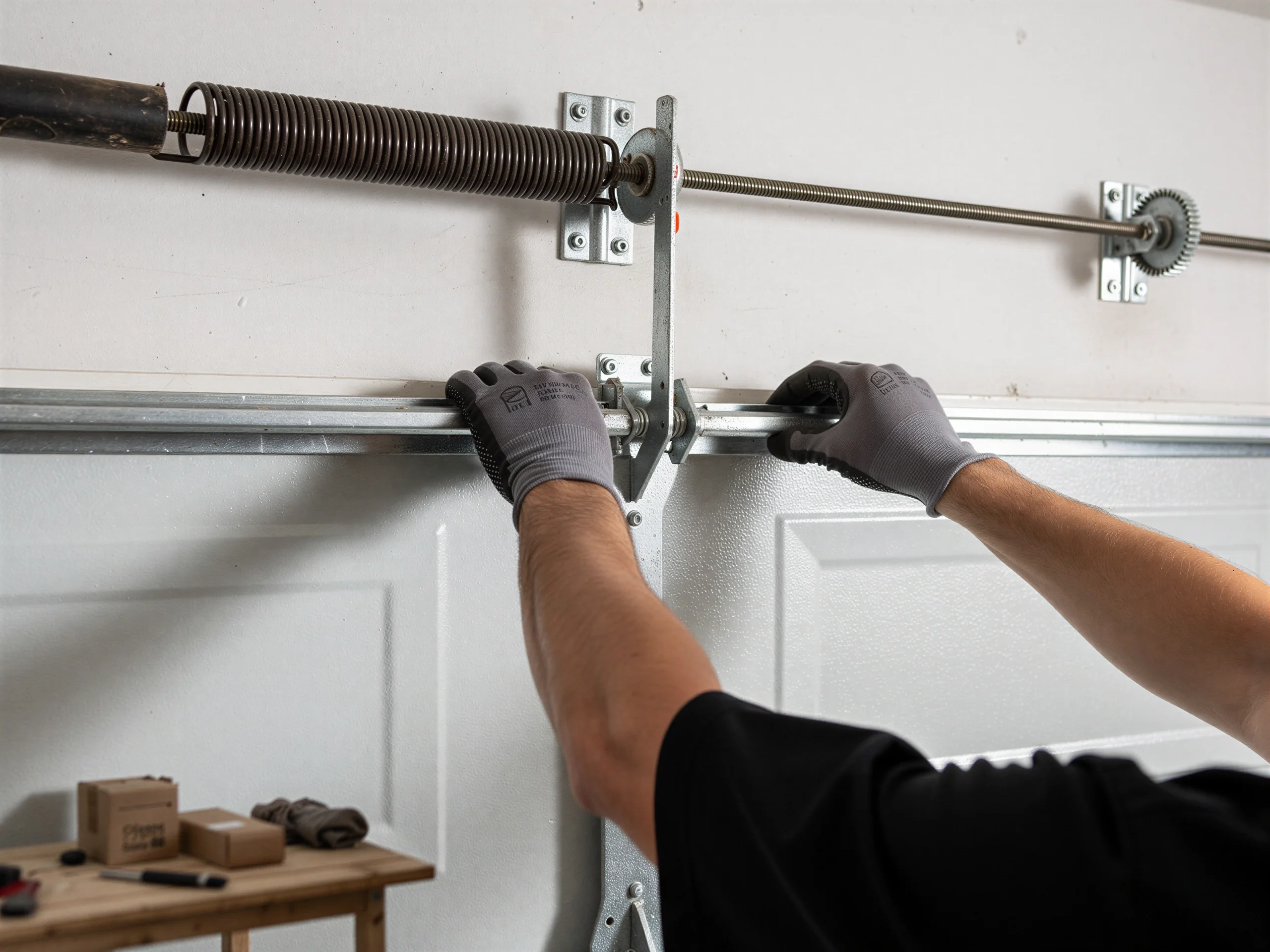
What you can't safely do is unwind or rewind the thing yourself. Torsion springs are loaded under enough tension to break a wrist or worse, and the winding bars for a 1980s-spec door aren't something most people have in a drawer.
Disengage bar, stop opener
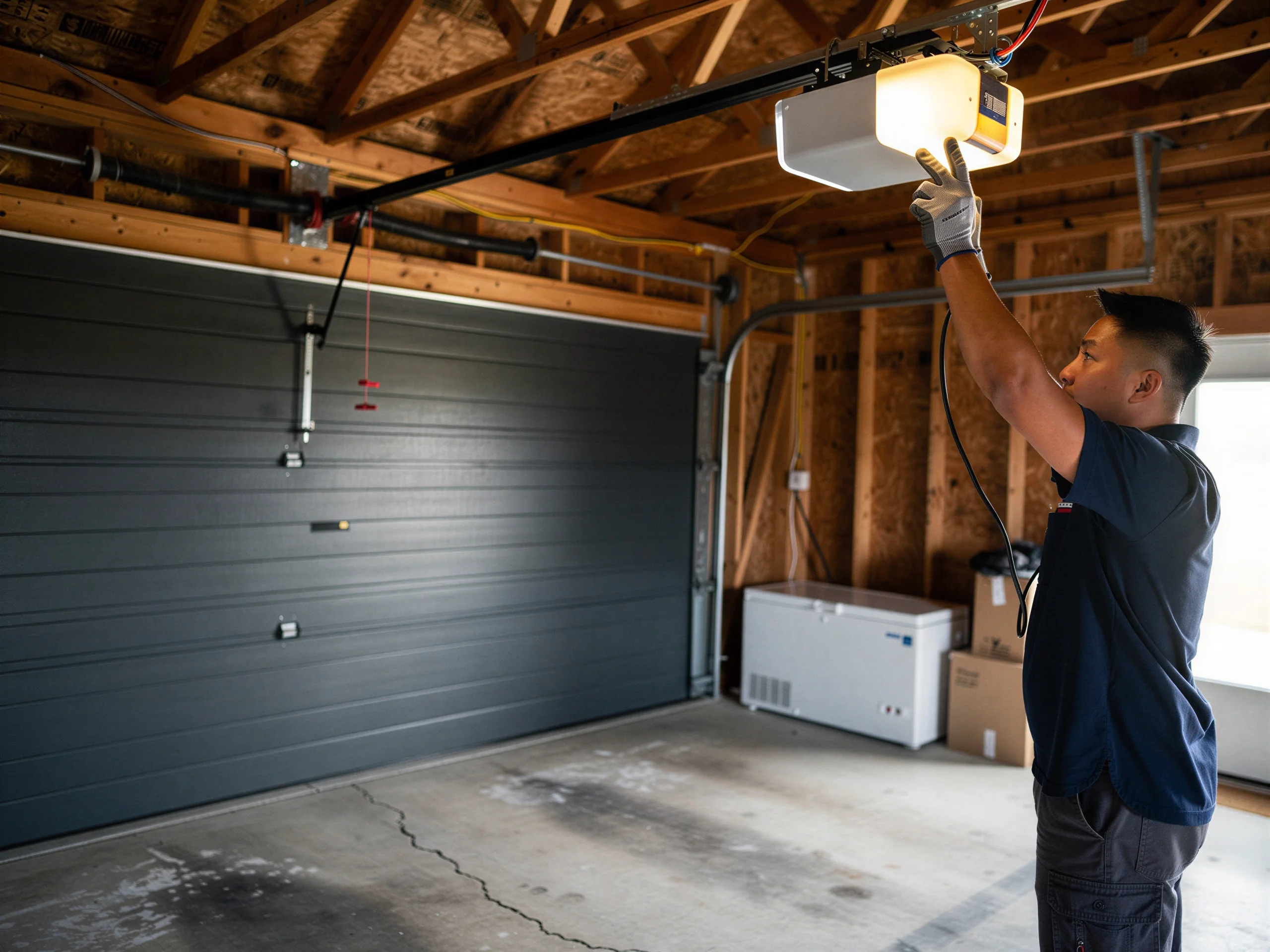
If the door won't move, or it moves and slams, leave the bar disengaged and don't force the opener to keep trying - that's how you turn a spring job into a track-and-panel job. We're honest that this isn't a DIY afternoon. Setting torsion correctly on an old shaft with worn bearings takes the right bars, the right cone size, and someone who's done it enough times not to guess.
Booking a Visit
We run out of North Port, about 4 miles from Warm Mineral Springs, so getting a truck here isn't a long haul. When you call, the two things that speed up the visit are the door's width (single or double) and whether you've got one spring or two. On older torsion setups, a single spring can run a double-wide door, which matters for sourcing the right size cone and wire gauge before we're on site.
We don't give a response time for this specific neighborhood - that depends on the day's schedule out of North Port - but we can usually tell you over the phone whether it sounds like a straight spring swap or something that's going to need a look at the drums and bearings too, especially if the hardware's never been touched since the house was built.
How It Shows Up
On a door this age, the spring doesn't always announce itself with a bang. Sometimes it's a door that feels heavier than it used to when you lift it by hand with the opener disconnected.
Opener strain and snapped springs
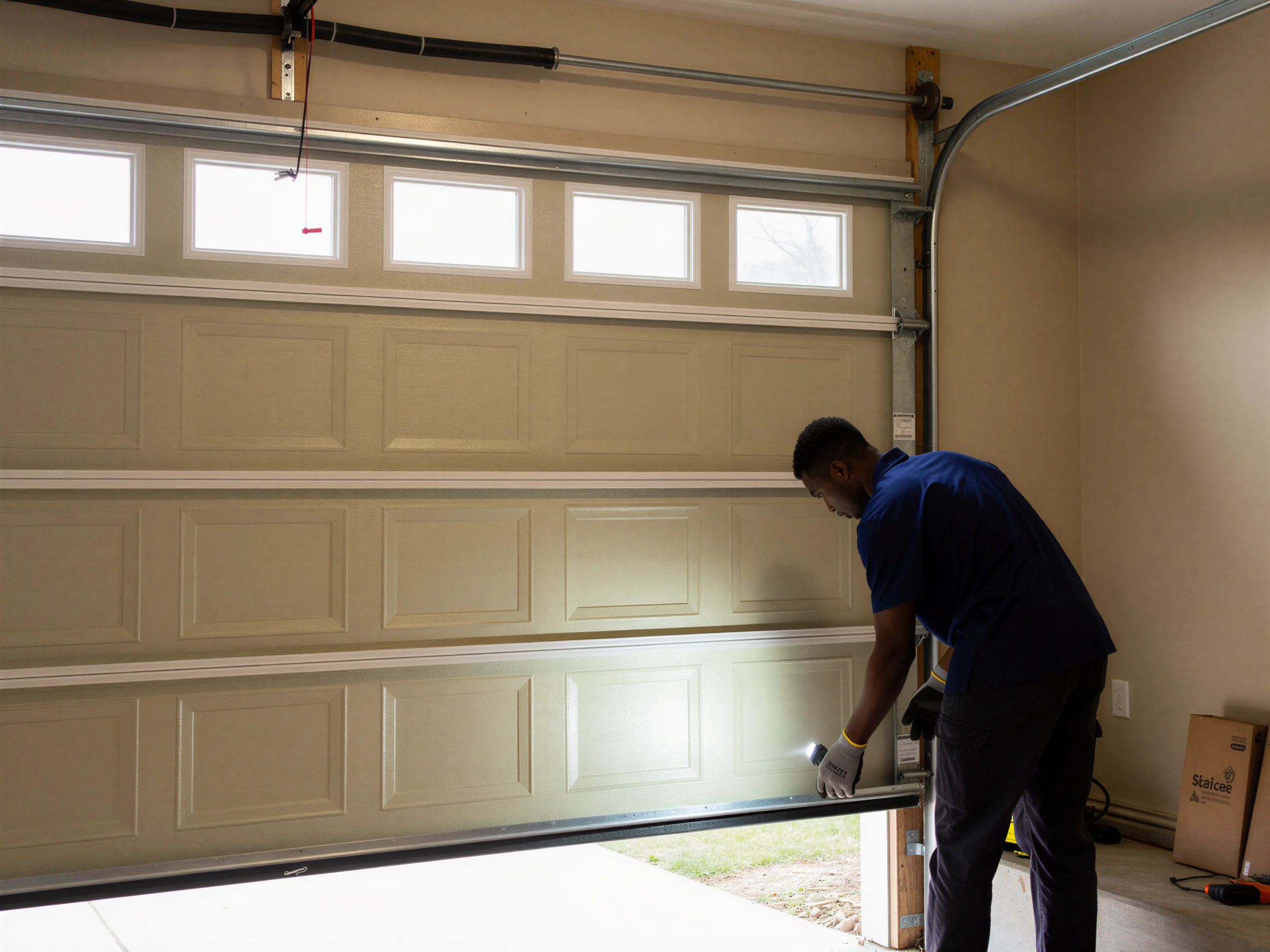
Sometimes the opener starts straining - slower travel, a grinding sound, or it stops partway and reverses. A fully snapped torsion spring usually shows as a visible gap in the coil above the door, and the door itself won't budge more than a few inches under opener power alone.
Stretched springs losing tension
Because so much of this area's housing stock dates to the early-to-mid 1980s, we also see the softer failures: a spring that's stretched and lost tension rather than broken clean, which still throws the door off balance and wears out the opener's gears trying to compensate. That's the kind of fault that gets ignored for months because the door still technically opens - until the day it doesn't.
What Causes It Around Here
Metal fatigue is the main driver, and the math is simple: a spring rated for a set number of open-close cycles has been doing that job on 1980s-era hardware for roughly forty years on original equipment. Add in the mild, humid coastal climate common to this part of Florida, and you get slow corrosion inside the coil that isn't visible from outside but speeds up the wear.
We also see household income and household size play into how long a worn spring gets left alone. With median household income here running lower than the wider North Port service area, a lot of owners put off a repair that's audibly failing until the door actually stops lifting, which turns a $150-range spring job into a job that also needs new cables or a drum. None of that is unique to this one street or that one house - it's the age of the housing stock doing what forty-year-old steel does.
What the Repair Takes
A straight torsion spring swap on a door from this era is usually a same-visit job: unwind and remove the old spring, check the shaft, bearing plates, and cable drums for wear since they're all original-age parts too, then set a new spring sized to the door's weight and wind it to the correct turns.
Checking both sides of doubles
On a double door we check both sides even if only one side failed, since the other one is the same age and usually not far behind. Where it takes longer: if the drums are grooved from wear, or a bearing plate has seized, those get replaced at the same time rather than left to fail again in six months.
No reused worn parts
We don't re-use a cone or a bearing that's visibly worn just to save a trip - that's a callback waiting to happen, and on hardware this old, it's rarely worth the gamble.
What Is on the Truck
We carry torsion springs in the size ranges that match 1970s-through-1990s door weights, since that's most of what we're repairing out this way - this isn't a newer subdivision with standardized lightweight doors. That means winding bars, a stock of cones and end bearing plates sized for older shafts, and replacement cable and drums for when the spring isn't the only thing that's worn out.
What we don't stock on the truck is every obsolete bracket from a discontinued 1980s door model - if your track hardware is a specialty part from a manufacturer that's since changed its line, that can mean a short order delay rather than a same-day fix. We'll tell you up front if that's the case rather than promise a part we don't have in hand.
Talk to a local pro
Garage door service in North Port?
Same-day service with honest, upfront quotes.