What It Costs
We don't post a flat number here because what an opener repair runs depends on what's actually failed, and in Venice Gardens that's rarely the simple stuff.
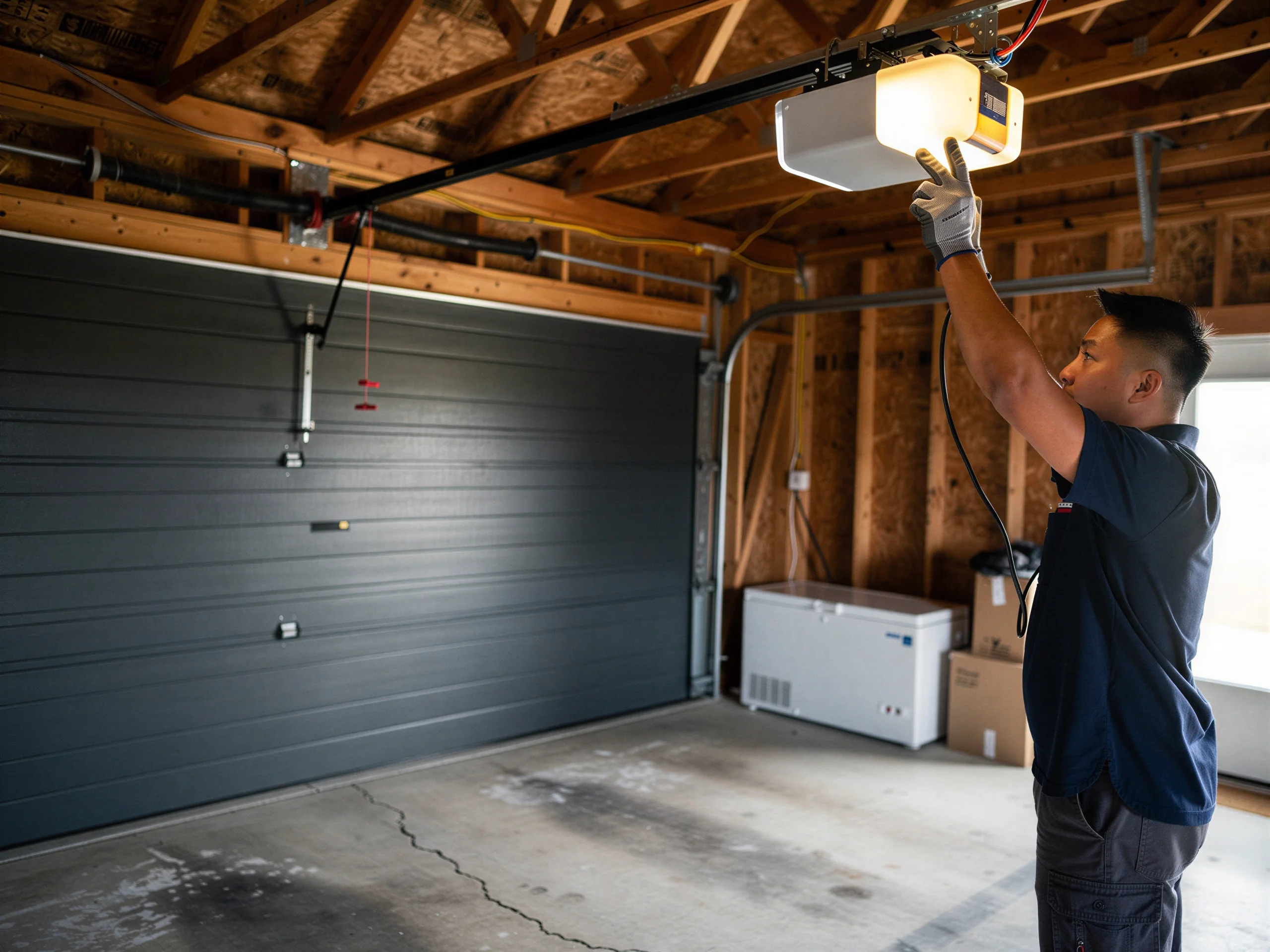
Second-generation opener units
A lot of the openers in this pocket of the service area are second or third-generation units, installed on houses that went up around 1968 - older than most of the surrounding build years in the broader North Port area.
Board swap versus replacement
A circuit board swap is one cost. A full unit replacement because the motor housing is cracked and the model's been discontinued is another, and it's not rare here.
On-site opener quotes
We quote on-site once we've opened the housing and tested the rail, not over the phone, because guessing a price before we've seen a 50-year-old drive mechanism does nobody any favors.</p> What we can tell you: if the logic board is dead but the motor and rail are sound, repair usually beats replacement. If the rail is bent or the gear is stripped on a unit this old, parts often aren't available and replacement is the honest answer.
Doing It Yourself
Resetting the travel limits or reprogramming a remote is something most homeowners can do with the manual, if you still have it. Replacing a worn drive belt or chain on a newer unit is a reasonable DIY job too, if you're comfortable on a ladder and know how to de-tension the system first.
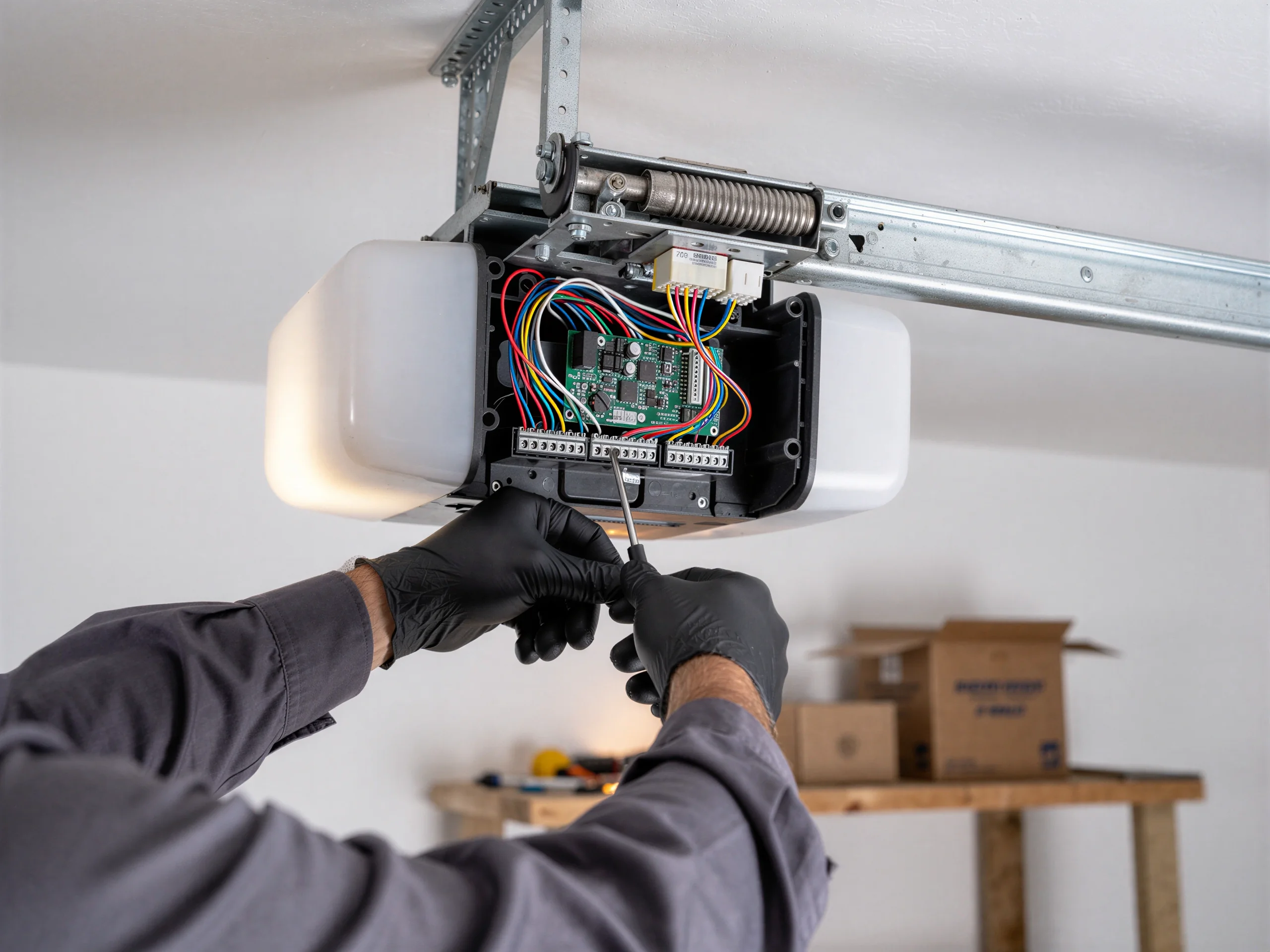
What we don't recommend touching yourself: anything involving the opener's circuit board, the motor capacitor, or wiring that predates GFCI-protected garage circuits, which is common in houses from the late 1960s. If the opener hums but doesn't move the door, or trips a breaker, that's an electrical fault, not a settings problem - stop and call someone rather than opening the housing with power still connected.
How It Shows Up
In this neighborhood the complaint we hear most isn't "the opener won't work at all" - it's intermittent. The door opens fine three times, then on the fourth the remote does nothing, or the wall switch works but the remote doesn't, or the door reverses halfway up for no visible reason.
Corroded logic board connection
That pattern points to a failing logic board or a connection that's corroded inside the housing, which happens more on original-era units that have run for decades in Florida's humidity even under this area's milder temperate conditions.
Stripped gear grinding
A grinding or clicking sound without door movement usually means the gear inside the unit has stripped - common once a chain-drive opener passes a few decades of service, and not something you tighten your way out of.
Blink codes read onsite
If the light blinks a set number of times before you can diagnose anything, that's the opener telling you an error code; we read those on-site rather than guess from a description over the phone.
Booking a Visit
We run out of North Port, about 13 miles from Venice Gardens, so a visit here is a scheduled trip, not a walk-over from a local branch. That's worth knowing upfront - we don't keep a crew stationed in the neighborhood, and we're not going to tell you otherwise. What we do is bring the diagnostic gear and common parts for the opener models that turn up most often in homes from this build era, so a first visit can often also be the repair visit.
Give us the opener's brand and, if you can find it, the model number stamped on the motor housing before we come out. For a neighborhood with roughly 1,410 households and a housing stock that skews toward older original equipment, that one detail saves a second trip more often than not.
What Can Go Wrong
The main point of failure on opener units this age is the circuit board - moisture and age both get at the solder joints over enough summers, and once it starts failing it's inconsistent, not a clean on/off switch.
Chain gears slip under load
Second most common: the drive gear, especially on chain-drive units, which wear down and start slipping teeth under load. Safety sensors are the other weak point.
Misaligned safety eyes block closing
If the small eyes near the bottom of the track are misaligned, dirty, or the wiring to them has degraded, the opener will refuse to close the door at all, or reverse it immediately - and that's often mistaken for a dead opener when it's actually a two-minute sensor fix. We check those first, before we touch the motor, because it's the cheapest possible explanation and worth ruling out.
What the Repair Takes
Most opener repairs here run under an hour once we've diagnosed the fault, assuming the part is something we carry on the truck. Circuit board replacements and gear kits for mid-range brands usually fall into that category. Where it stretches longer is when the unit is old enough that the exact board or gear kit isn't made anymore - in that case we're not stretching the repair, we're telling you it's time to replace the opener itself, and we'll say so rather than patch something that'll fail again in six months.
Given the median build year in this part of the service area sits around 1968, that conversation comes up more here than in newer construction nearby. It's not a sales pitch - it's just where the hardware's useful life runs out.
Talk to a local pro
Garage door service in North Port?
Same-day service with honest, upfront quotes.