What Causes It Around Here
Charlotte Park's median household income sits at $63,929, a few thousand above the $60,885 median across the North Port Garage Door Pros service area. That number matters more than it sounds like it should, because it's usually what decides whether a bad spring or a worn opener gets fixed or the whole door gets swapped. At this income level, most owners we talk to want the repair done right rather than the cheapest patch, and they can afford to replace a door instead of nursing one that's already failed twice.
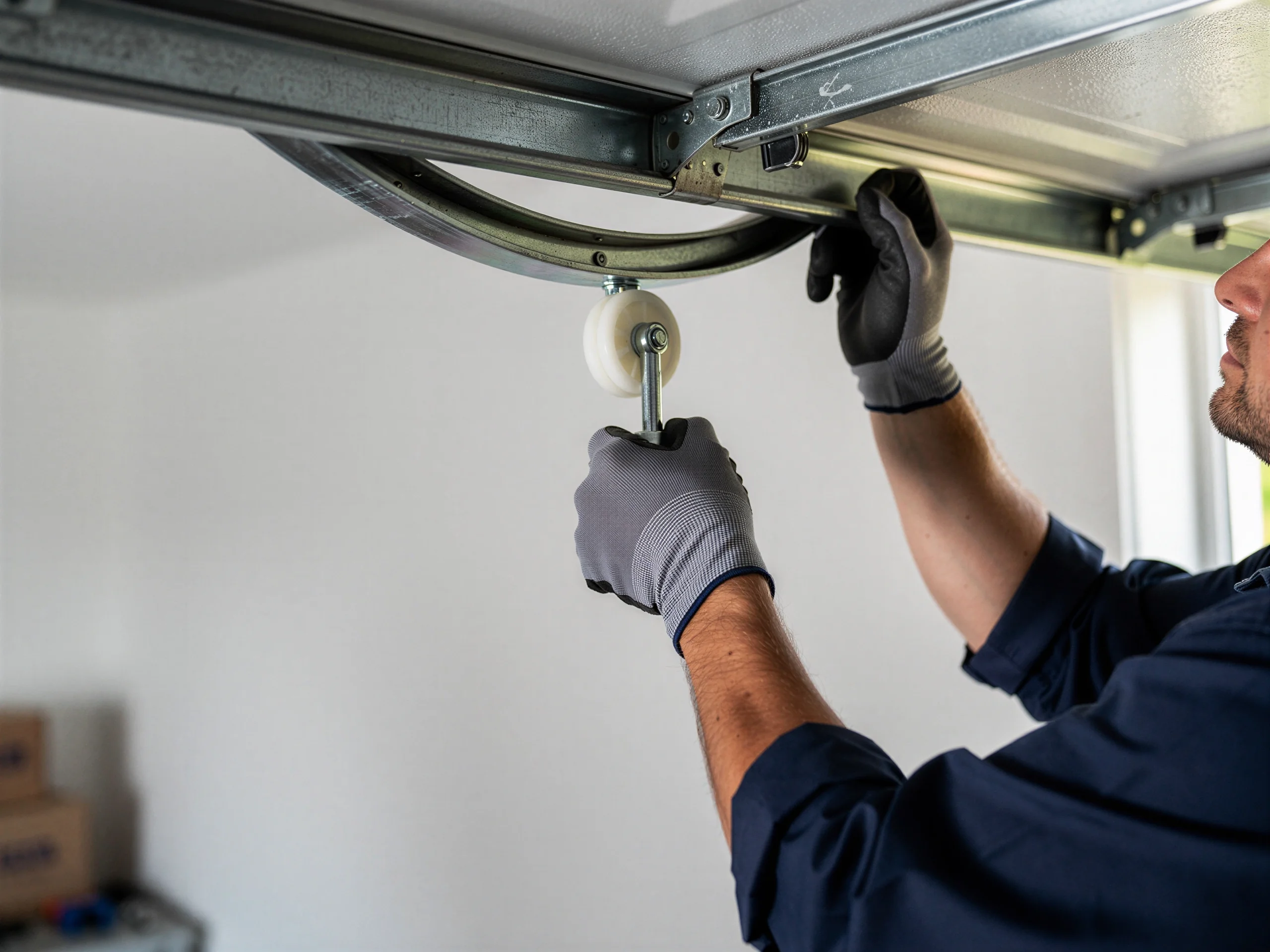
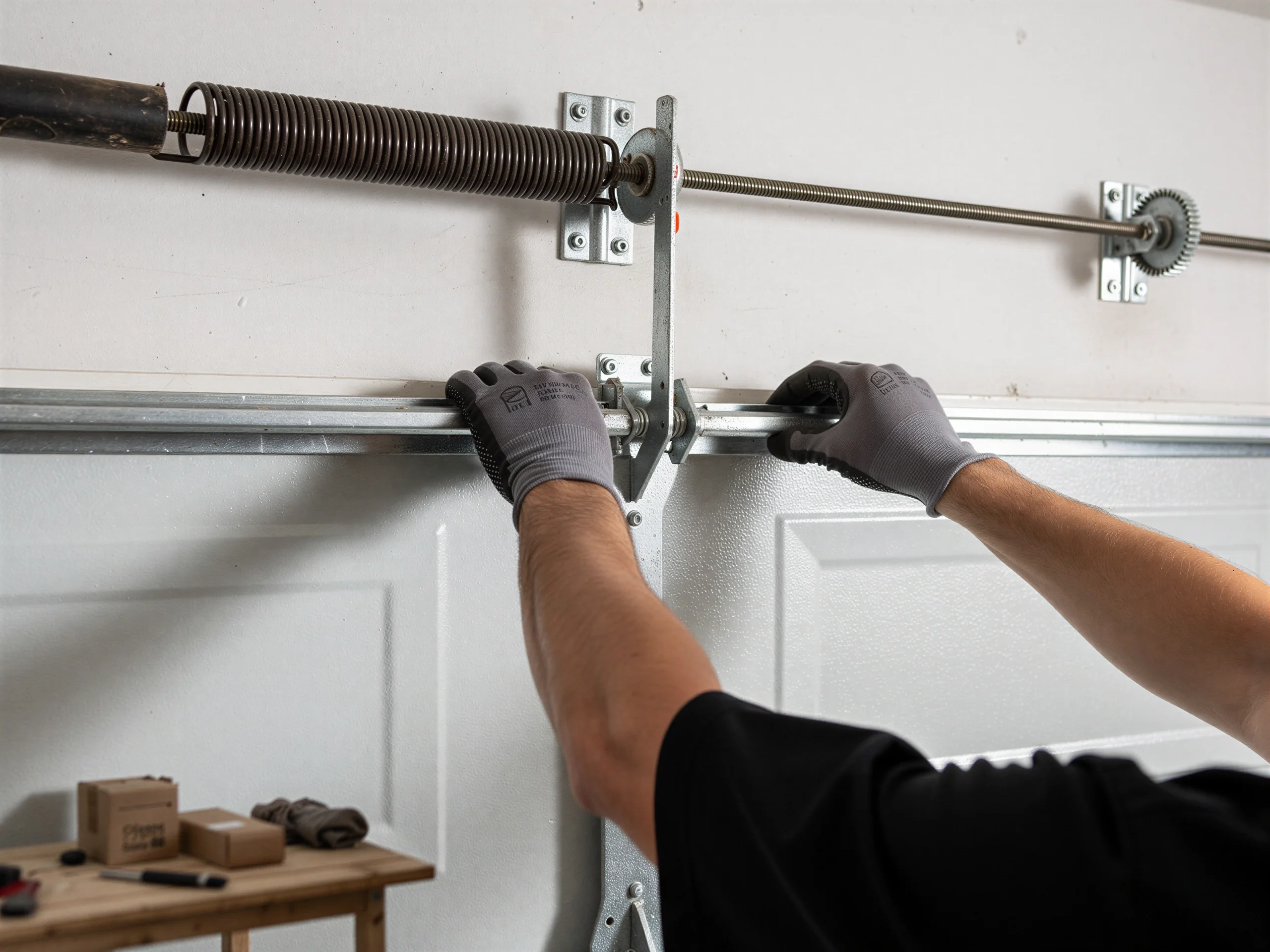
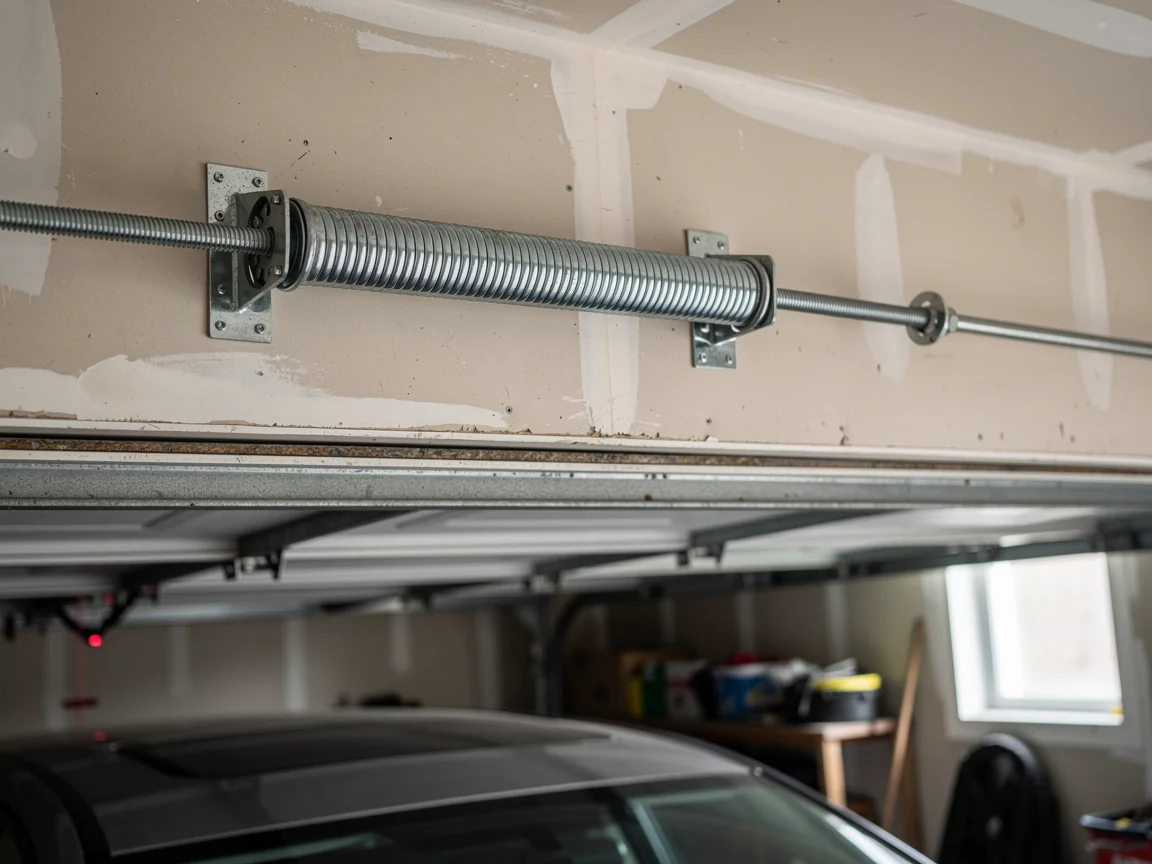
The housing here also runs newer than a lot of the area. Homes in Charlotte Park cluster around a 2003 build year, while the broader service area's median goes back to 1983. That twenty-year gap shows up directly in the garage. Newer construction here tends to run insulated steel sectional doors on standard torsion springs rather than the older extension-spring, single-layer doors you still find on 1980s houses nearby. The failure points are different: nylon rollers wearing out, torsion spring cycle life running down, photo-eye sensors drifting out of alignment on tracks that were installed to code but never adjusted since.
Booking a Visit
We run out of North Port, about 14 miles from Charlotte Park, so a call here goes on the same route as the rest of the service area rather than a separate local crew.
Truck-based service, no branch
That's worth knowing upfront: this isn't a branch office, it's a truck that comes out from North Port when you call. Tell us the year the house was built if you know it and what the door is doing - won't open, won't close, makes a bang, sags on one side.
Mostly opener and spring jobs
With houses in this pocket mostly dating to the early 2000s, most jobs are opener or spring work rather than the full hardware replacement older stock sometimes needs, so a clear description up front usually means the right parts are already on the truck.
What Is on the Truck
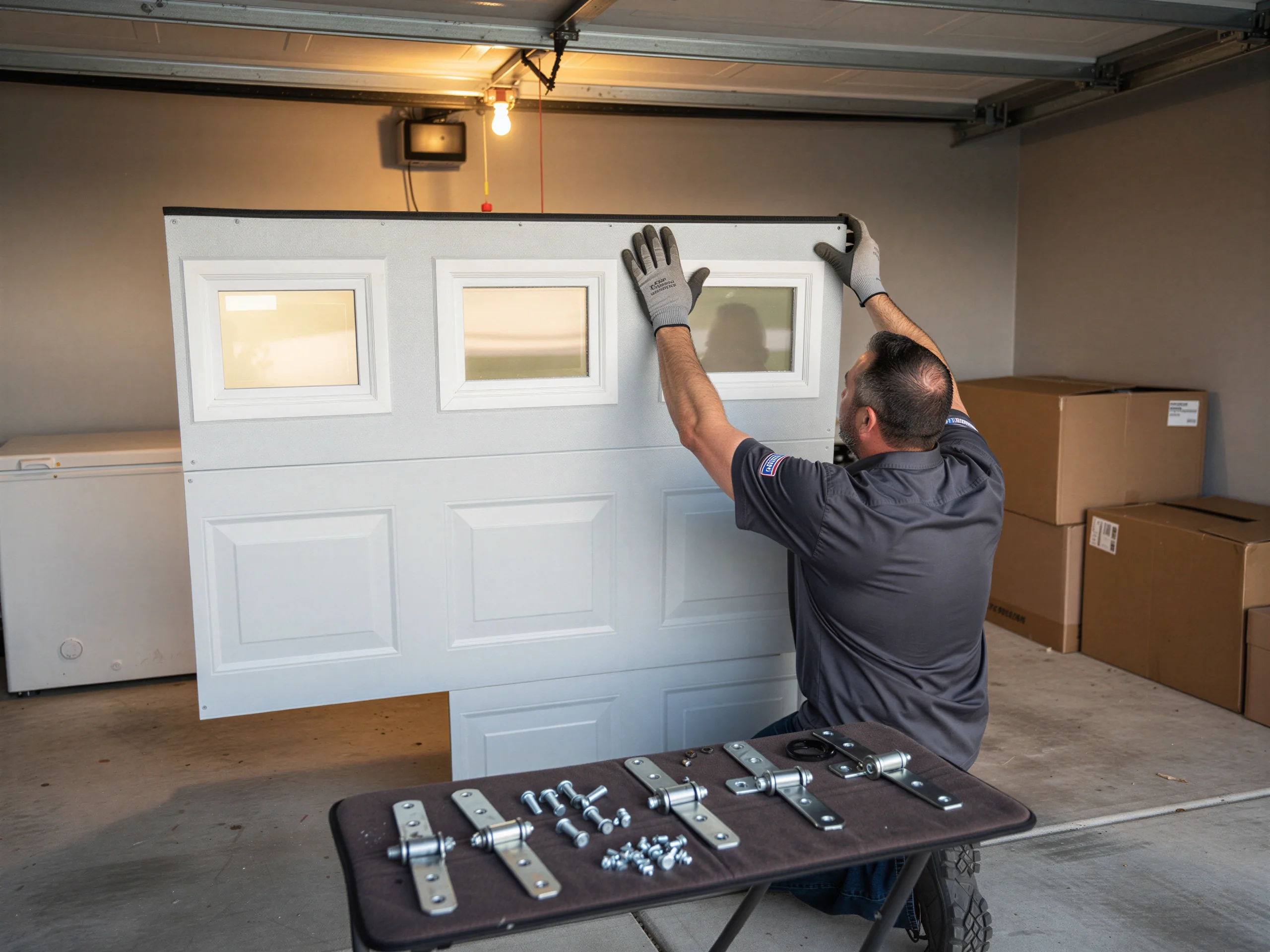
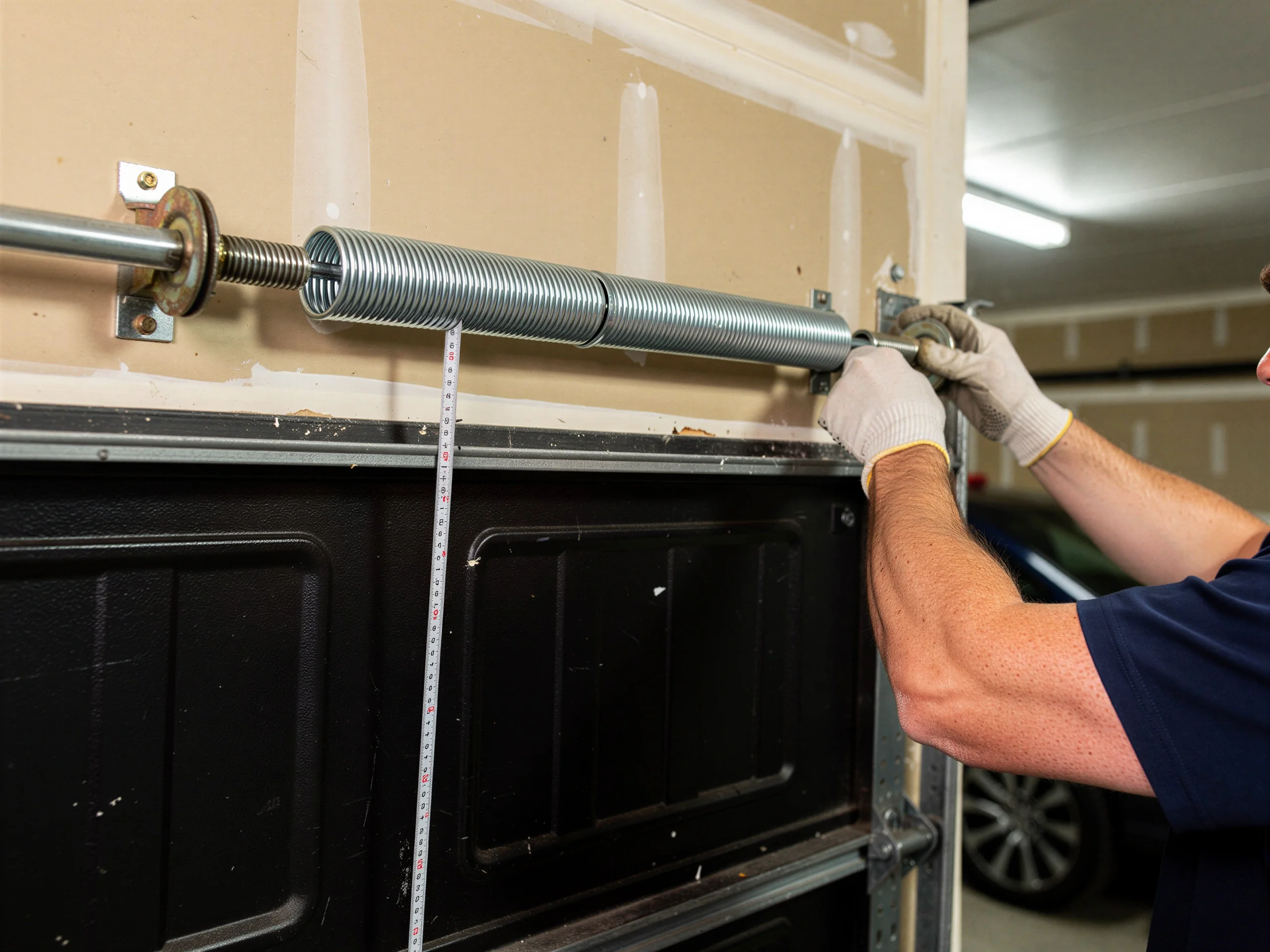
Given how much of Charlotte Park's housing clusters around 2003, the truck is stocked for torsion spring work on standard-width sectional doors - the setup that's common in houses from that era rather than the older extension-spring doors still found on 1980s-90s construction elsewhere in the service area. That means torsion springs in common cycle-life ratings, nylon rollers, standard-size cables, and photo-eye sensors are usually on hand without a special order.
Where we come up short is anything custom: a door with an odd panel width, a discontinued opener board, or hardware from a builder who used something nonstandard. On a newer, more uniform street like this, that's rare, but it happens, and when it does the part has to be ordered rather than pulled off the truck that day.
How Long You Are Without the Door
A straightforward torsion spring replacement or roller swap on a standard 2000s-era door is usually a same-visit job - the part's on the truck, the fix doesn't involve chasing down odd hardware.
Panel and board ordering delays
What stretches it out is a damaged panel or an opener board that needs ordering, and in a neighborhood built mostly in one era, panels that match the existing door aren't always a same-day item.
Usually finished in one visit
We won't quote a response window here since the visit comes from North Port rather than a local depot, but once the truck arrives, most jobs on this type of door close out in one trip.
How It Shows Up
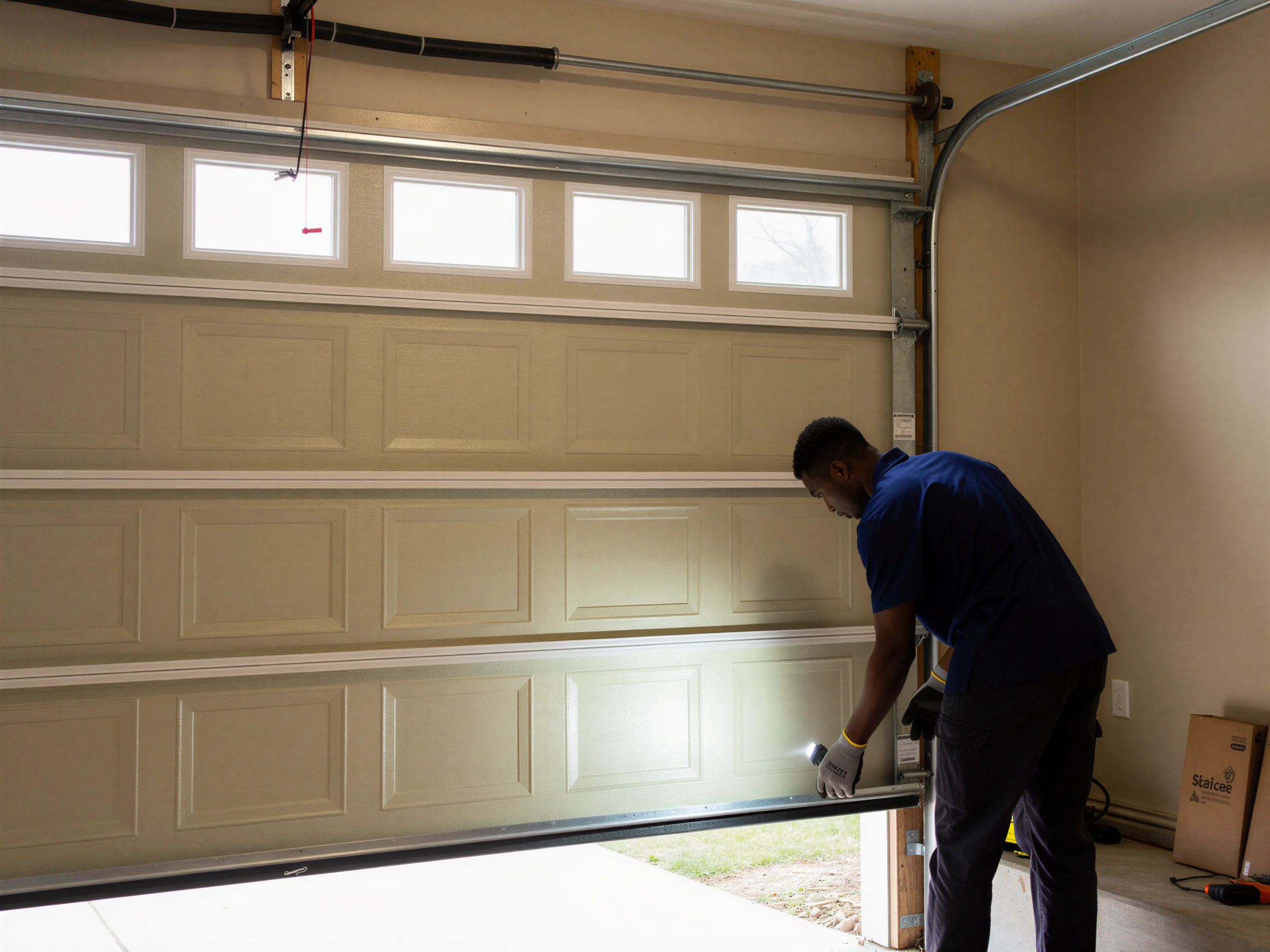
On a torsion-spring door from the early 2000s, the first sign is usually the door hanging unevenly when you hit the opener, or the opener motor straining and reversing partway up. That's the spring losing tension, not the opener failing, even though the opener takes the blame. A loud bang from the garage, especially one that happens when nobody's touched the door, is almost always the spring itself letting go.
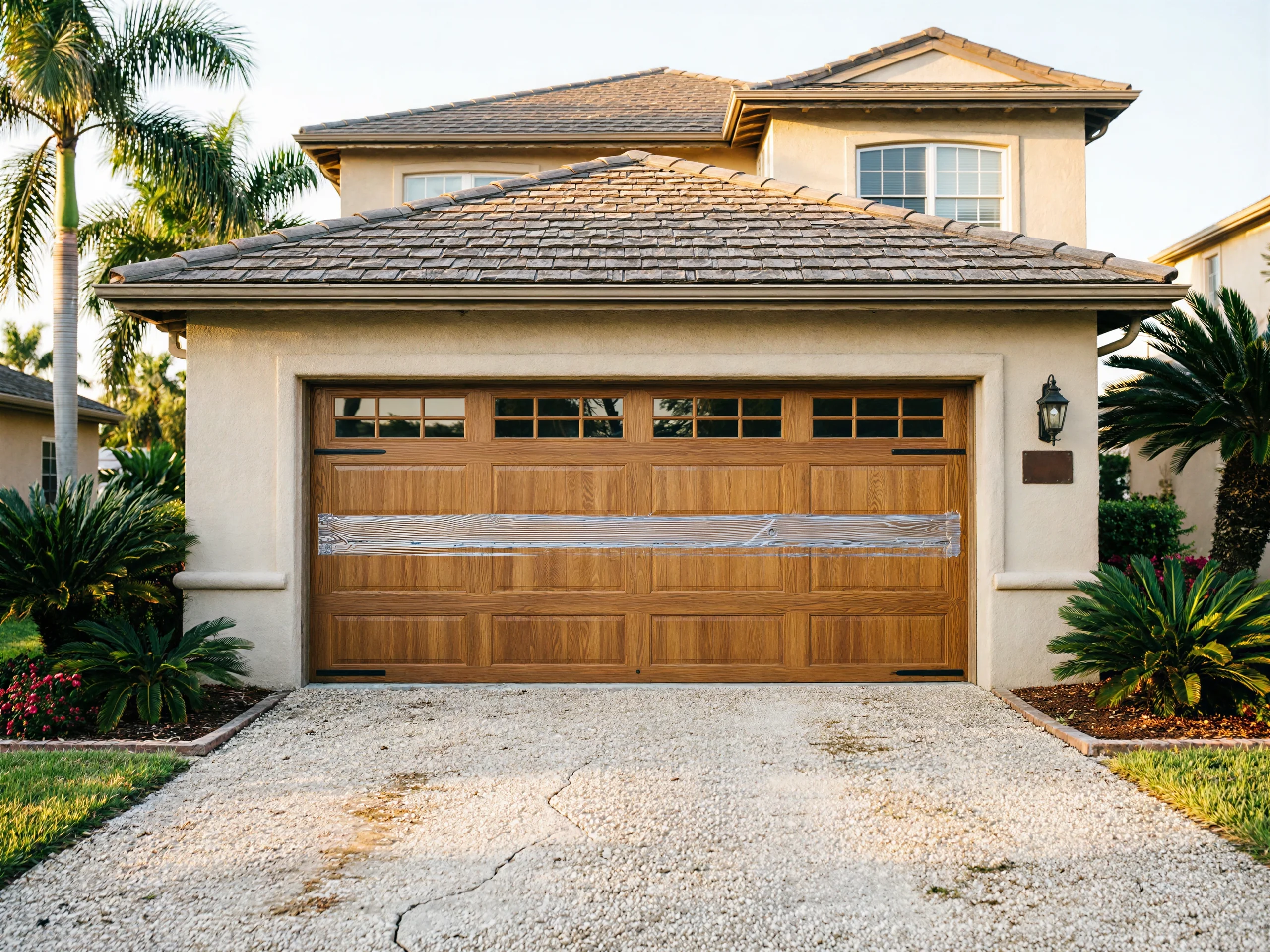
On these newer builds you'll also see photo-eye issues - the door won't close, reverses immediately, or blinks a light on the wall unit. With insulated steel doors like most of what's in this pocket, panel dents from a car bumper are more a cosmetic complaint than a functional one, unlike older wood doors where a dent can mean the panel's compromised.
What Can Go Wrong
The most common call from this part of the service area is a torsion spring that's reached the end of its cycle life - normal wear on a door that's otherwise sound. Second most common is a misaligned photo-eye sensor, usually from a stray basketball or a bike leaned against the track rather than anything wrong with the door itself.
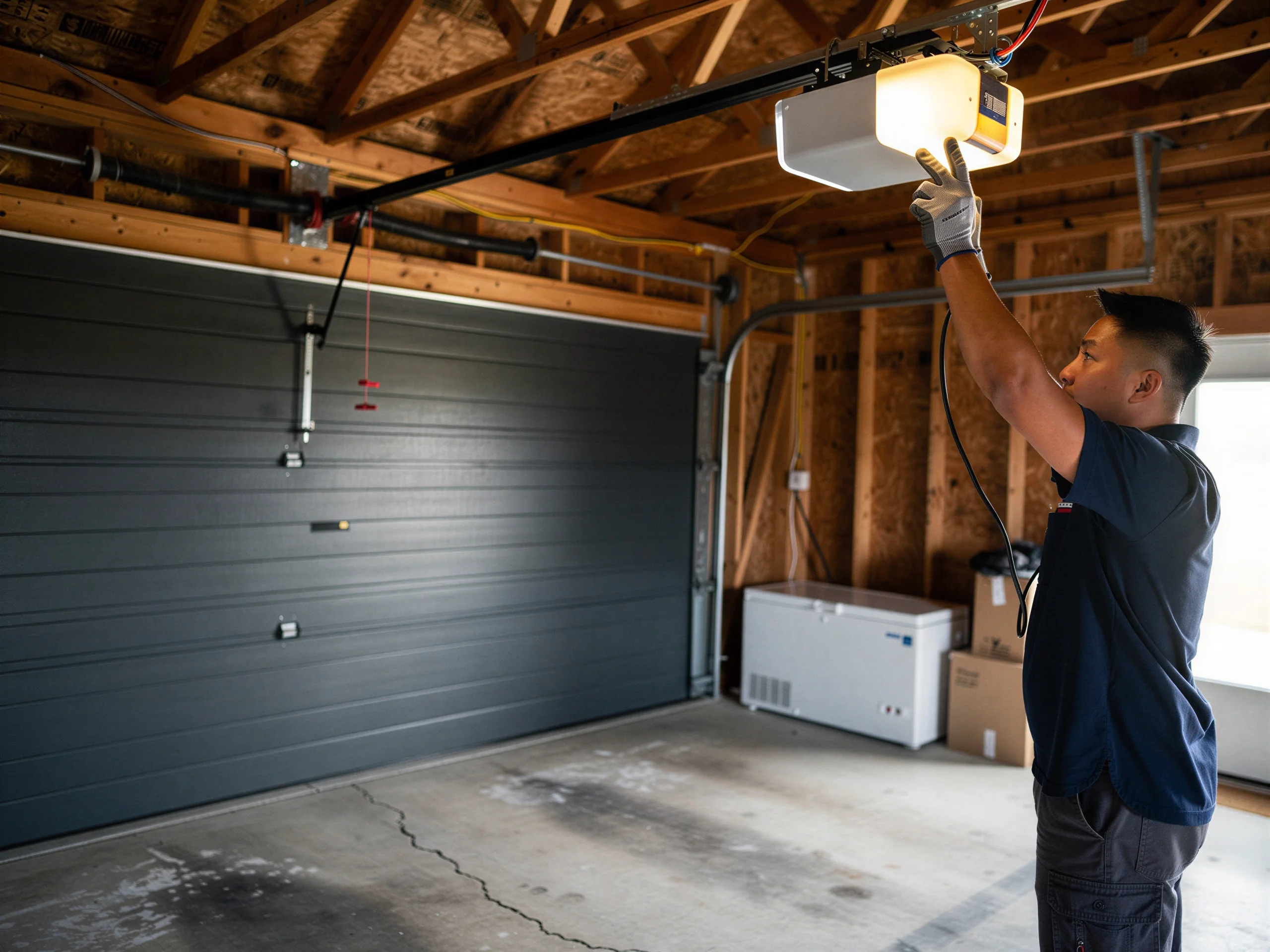
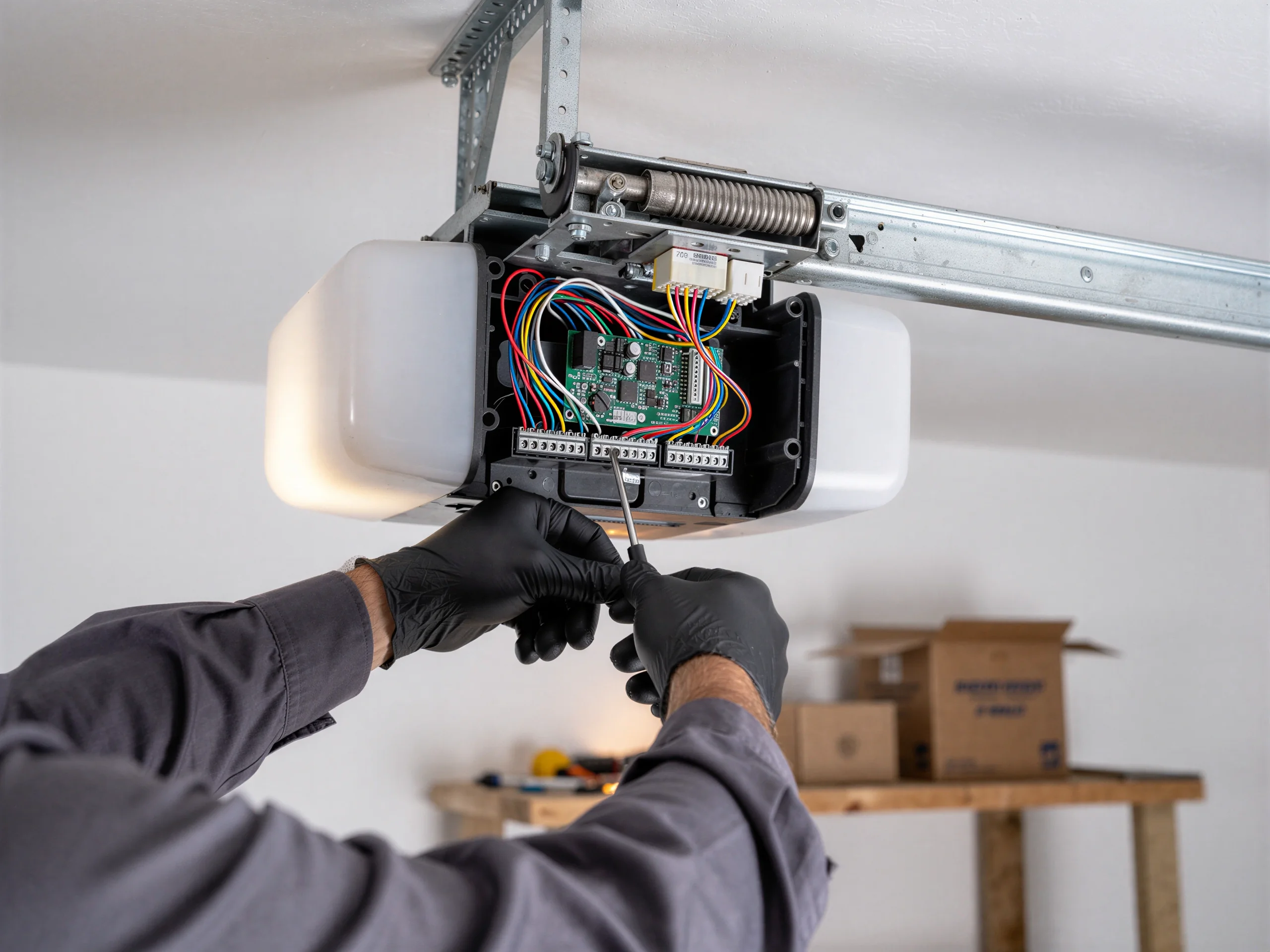
Less common but real: an opener logic board failing on a door that's otherwise in good shape. On a 2003-era house that's not unreasonable to see now, and depending on the opener model, the board can be a special-order part rather than something carried standard. We'll tell you straight if that's the case rather than stringing out a visit waiting on a part that isn't coming that day.
Talk to a local pro
Garage door service in North Port?
Same-day service with honest, upfront quotes.