Doing It Yourself
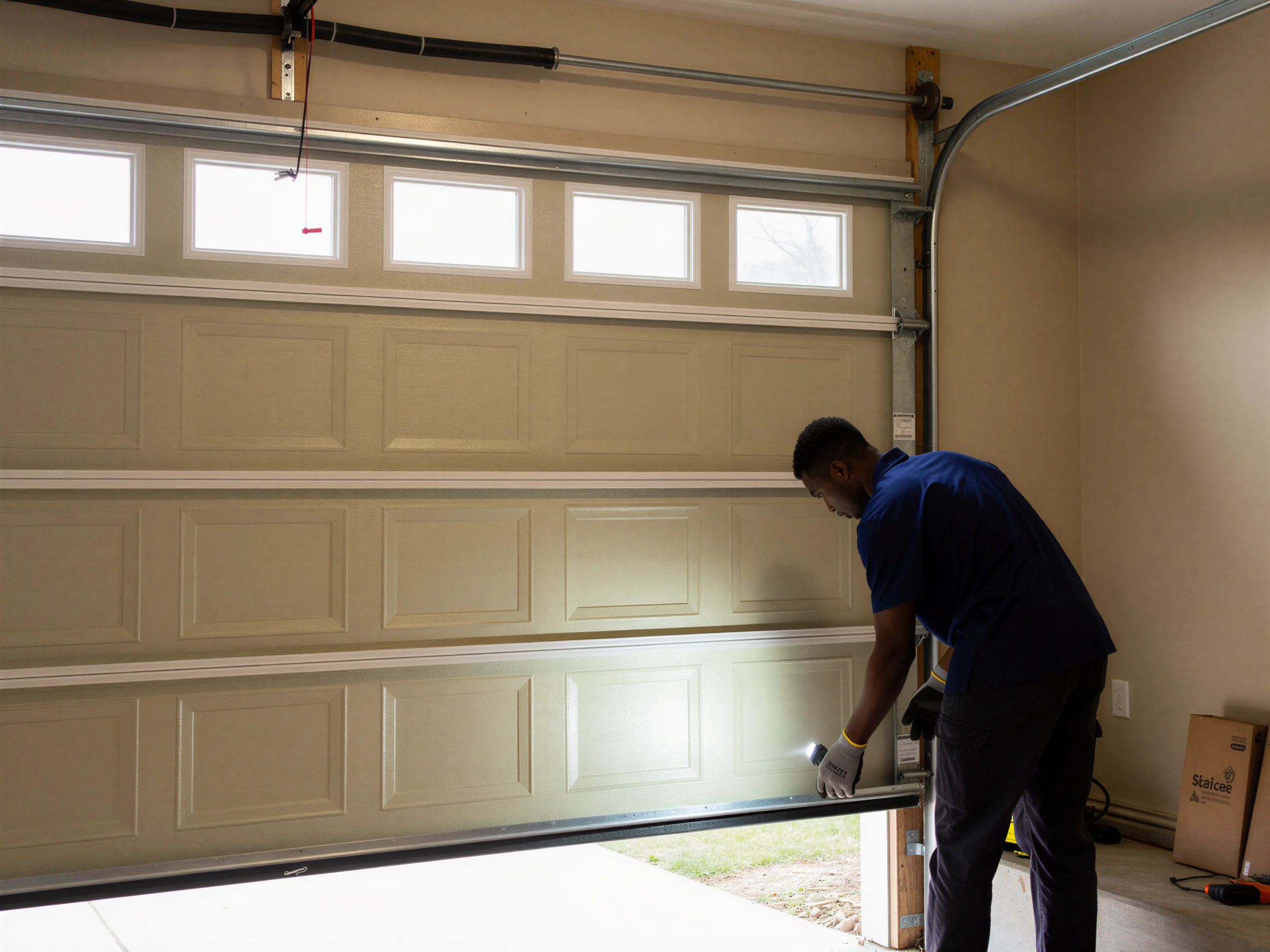
A lot of what goes wrong on a door built around 1984 is stuff you can check before you call anybody. Pull the release cord and move the door by hand - it should travel smooth and stay put wherever you let go.
Sudden drop means spring
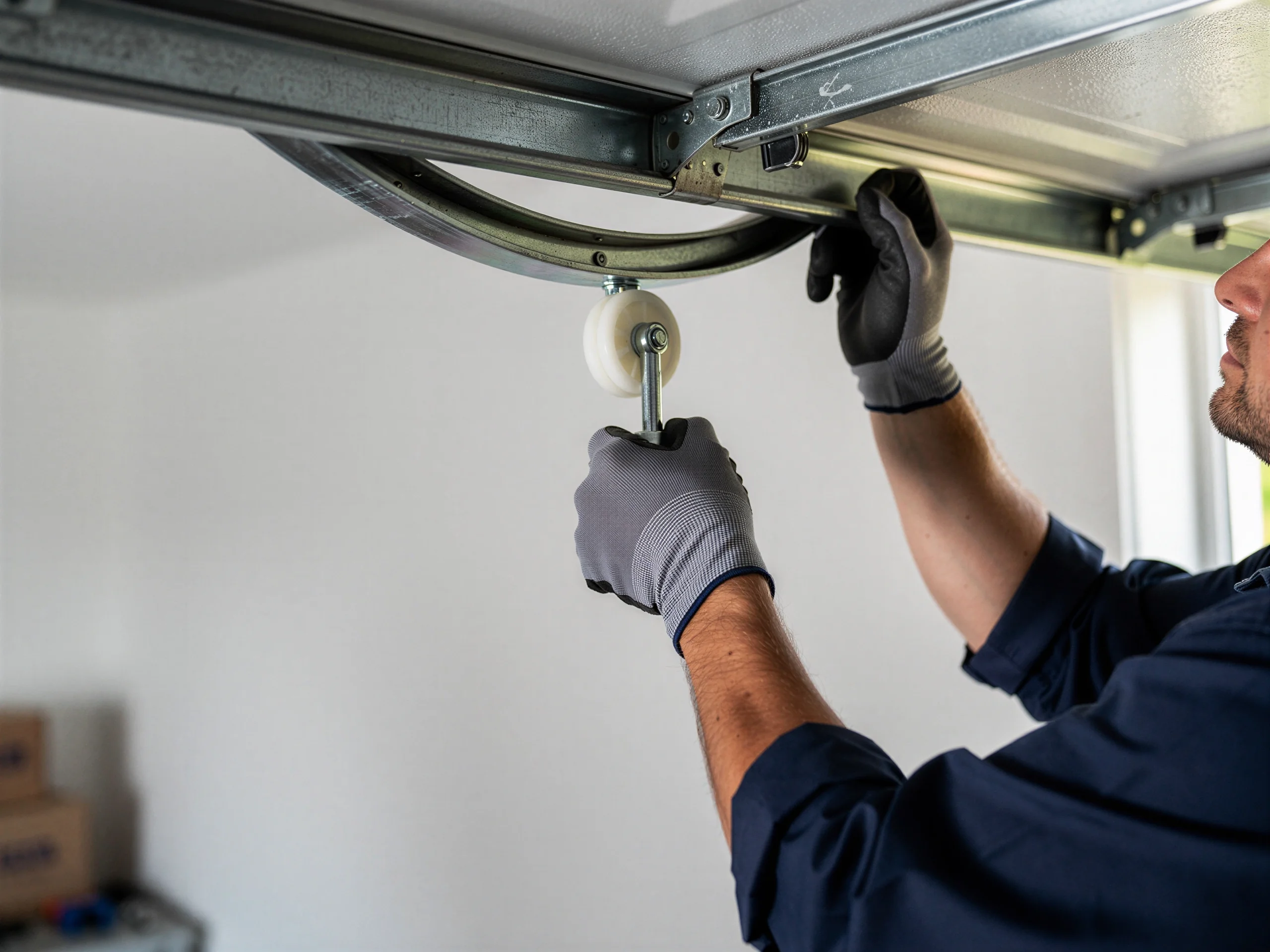
If it drops like a rock, the torsion spring is losing tension and that's not a DIY fix. Check the track for dents, the rollers for flat spots, and the bottom seal for gaps you can see daylight through. Tighten loose roller brackets with a socket, not a drill, so you don't strip the bolt. What you shouldn't touch: the torsion spring itself.
Original spring under load
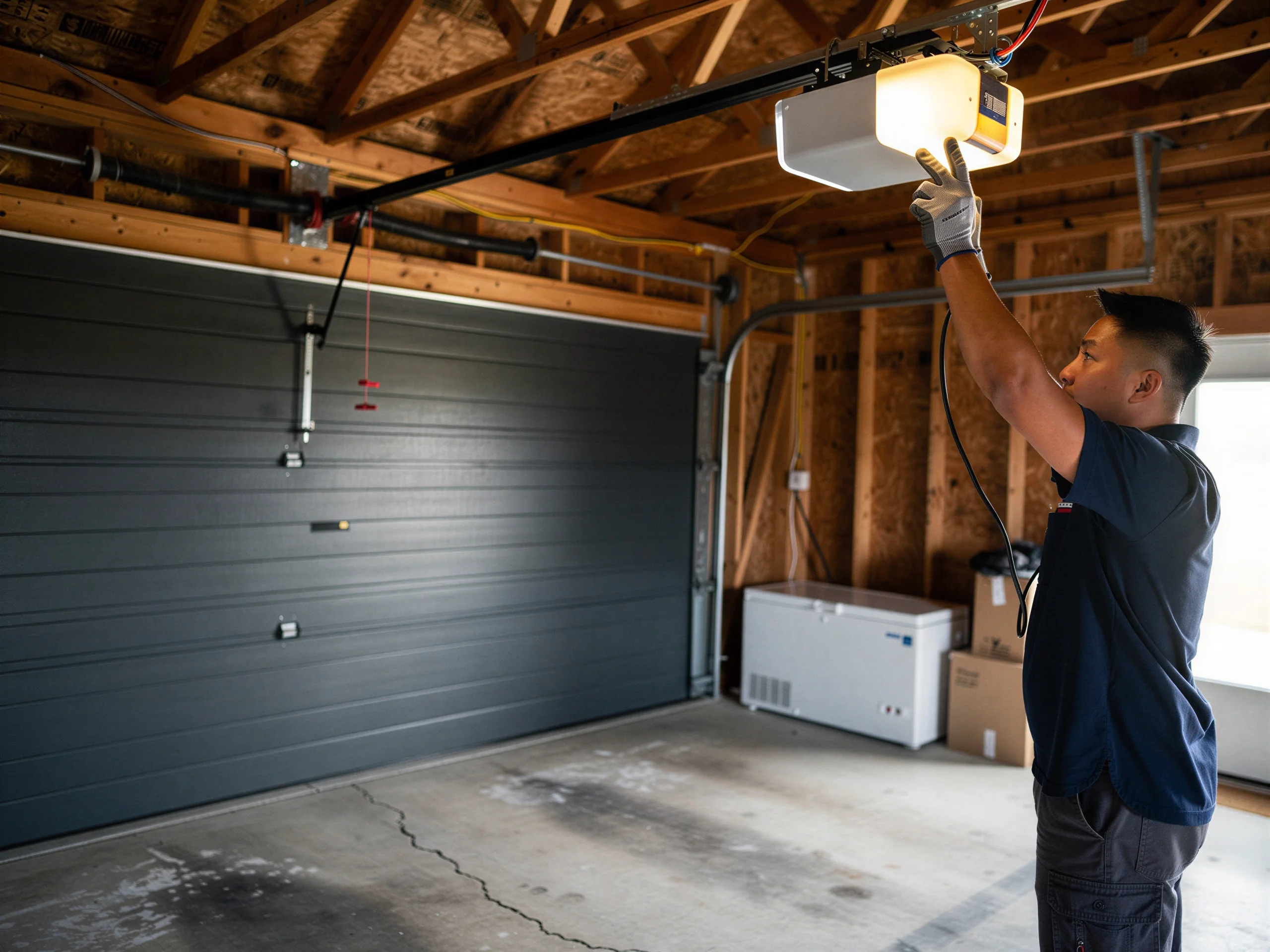
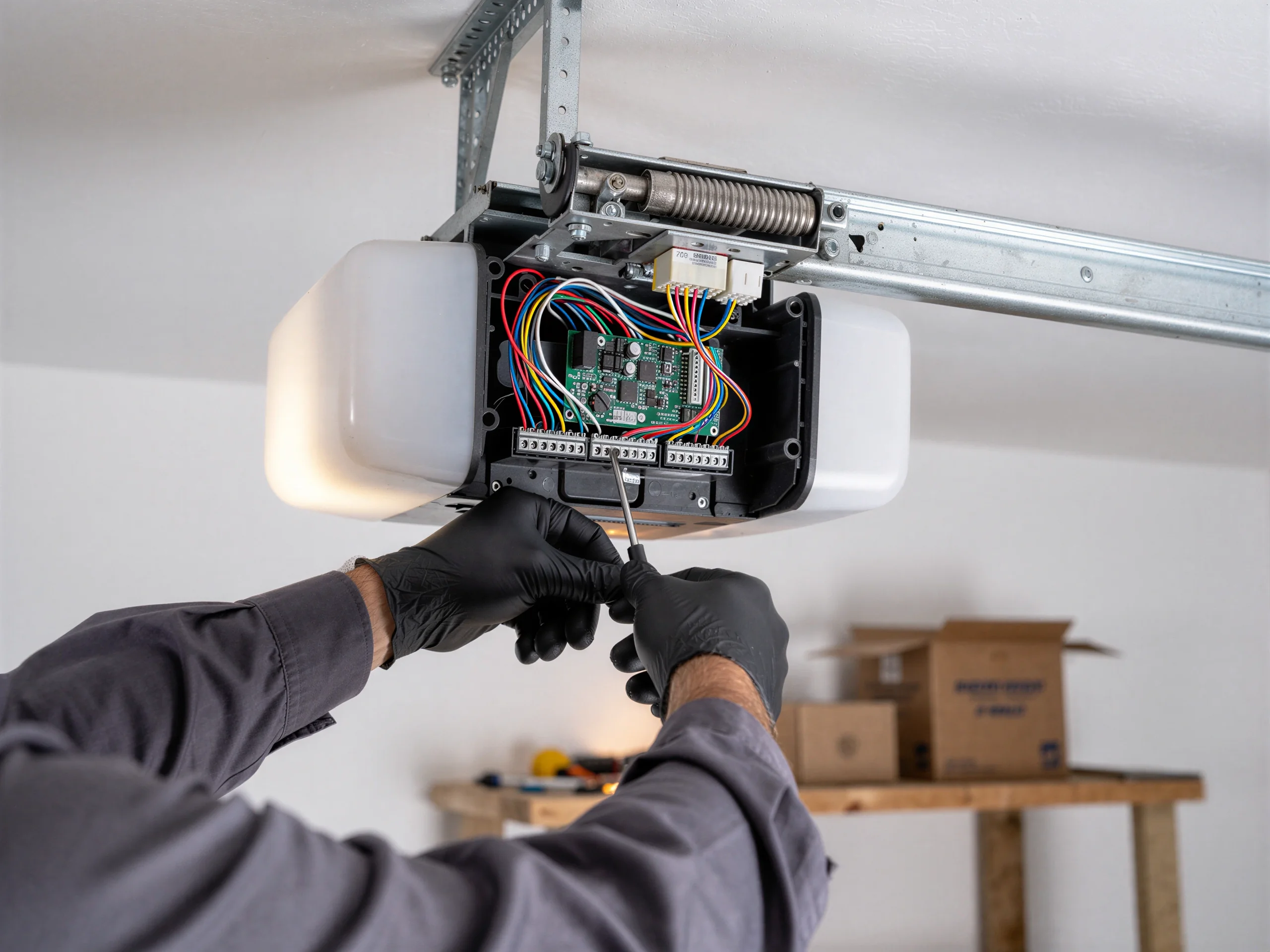
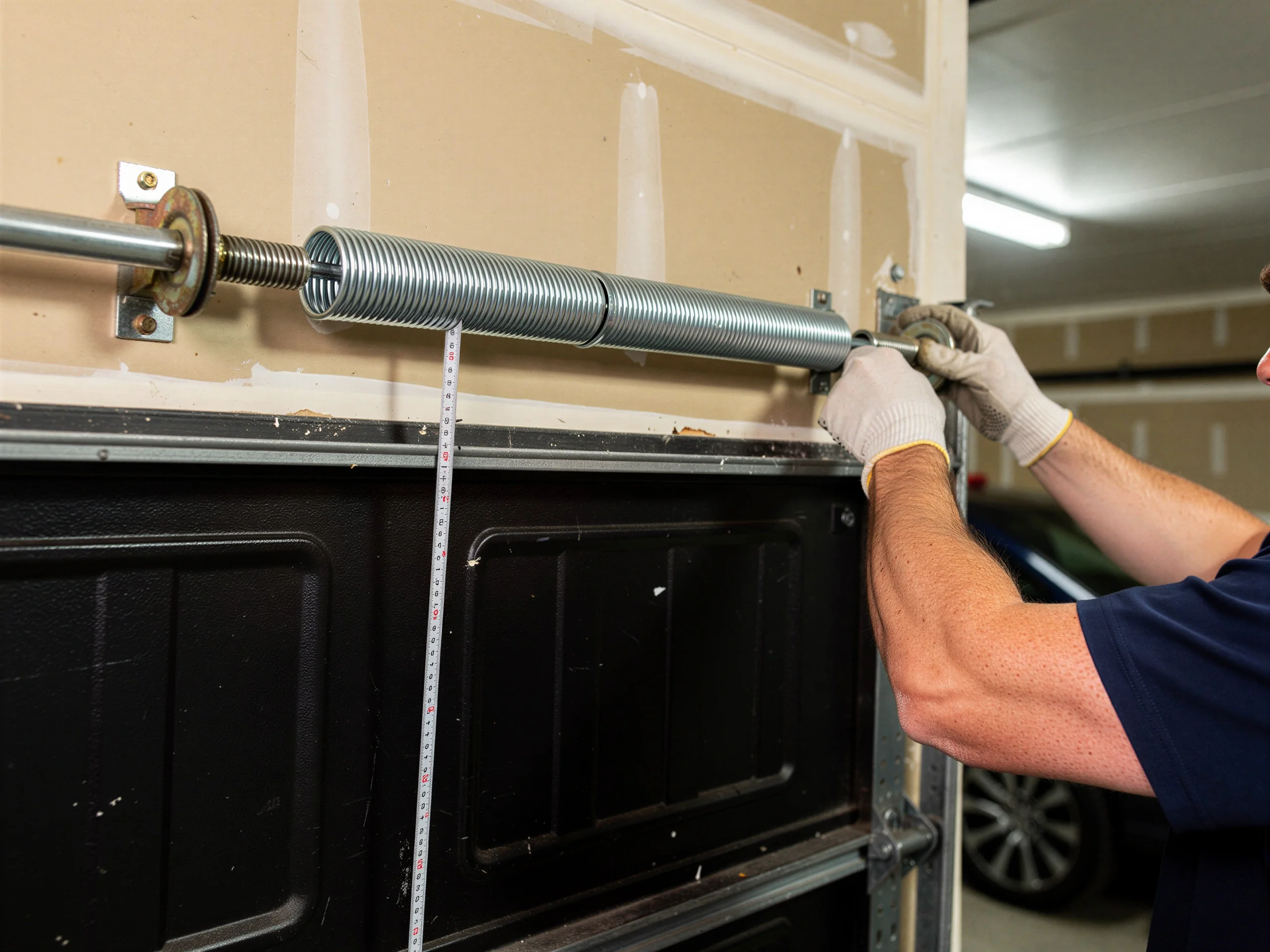
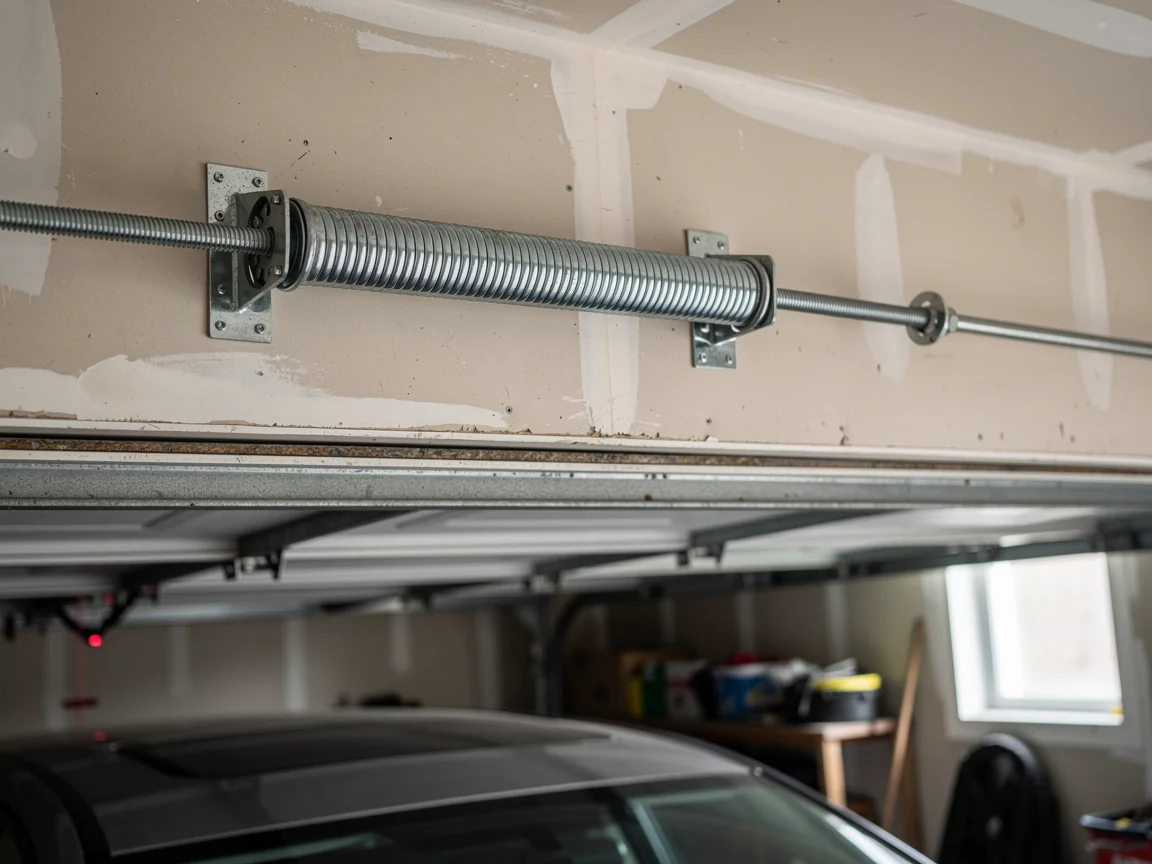
On doors this age the spring is original or close to it, under full load, and wound tight enough to break a wrist if it lets go while you're working on it. If the opener is a chain-drive unit from that era, listen for a grinding sound at the motor - that's usually the gear kit wearing out, not the chain.
Off-track means two-person job
Lubricate hinges and rollers with a garage-door-specific spray, not WD-40, which washes grease out of bearings instead of adding to it. If the door is off its track or a cable has snapped, stop and call - that's a two-person job with the door under tension.
Booking a Visit
We run out of North Port, about 4 miles from Warm Mineral Springs, so getting a truck out here doesn't add much to the day. When you call, have the door's approximate age ready - if your house falls in that early-80s build wave common to this area, tell us, because it changes what we bring. We'll ask whether the door still opens at all, whether it's a spring or an opener complaint, and whether you've got one car stuck inside. We book the visit around what you tell us on the phone, then confirm parts once we're looking at the actual spring size and track width in person, since those varied even within the same build year.
How It Shows Up
On a house built in 1984, the complaint is rarely subtle. The door won't lift past a foot, or it lifts crooked with one side dragging low.
Trolley or drive gear
Sometimes the opener runs but the door doesn't move - that's the trolley or the drive gear, not the motor. A loud bang followed by the door refusing to budge is almost always a torsion spring giving out; it's been doing its job since the house was built and it's earned the failure.
Rust streaks and coil gaps
Rust streaks on the spring coils or a visible gap where one coil has pulled away from the next are signs it's close. Doors that sag at the corners or won't seat flush at the bottom usually point to worn rollers or a bent track rather than the spring.
Fewer weather failures
We see fewer weather-driven failures here than you'd get further north - the mild temperate conditions this area sits in don't put the same freeze-thaw stress on hardware - so when something breaks on a door this age, it's almost always wear, not a storm.
What Causes It Around Here
The housing stock around Warm Mineral Springs centers on 1984, and that year matters more than people think. Doors going up then typically came with galvanized torsion springs rated for a specific lifespan in cycles, not years, and most of those springs are well past their rated count by now. Openers from that era were often 1/3 horsepower chain-drive units without the safety reversing sensors that became standard later - if yours still closes on something without stopping, that's an opener worth replacing outright, not patching. Steel panel doors from the mid-80s used lighter gauge steel than what's sold now, so dents and flex-fatigue cracks show up along the bottom panel where cars clip the door or kids lean bikes against it. None of this is specific to one house - it's the whole build wave in this part of the service area aging out at the same time, which is why we see clusters of the same failure within a few years of each other.
What the Repair Takes
Most torsion spring replacements on a door this age take under two hours once we've got the right spring size confirmed - and on 1984-era doors, that size isn't always what a parts chart says it should be, because some were swapped or re-wound once already over the decades.
Reinforcing a loose bracket
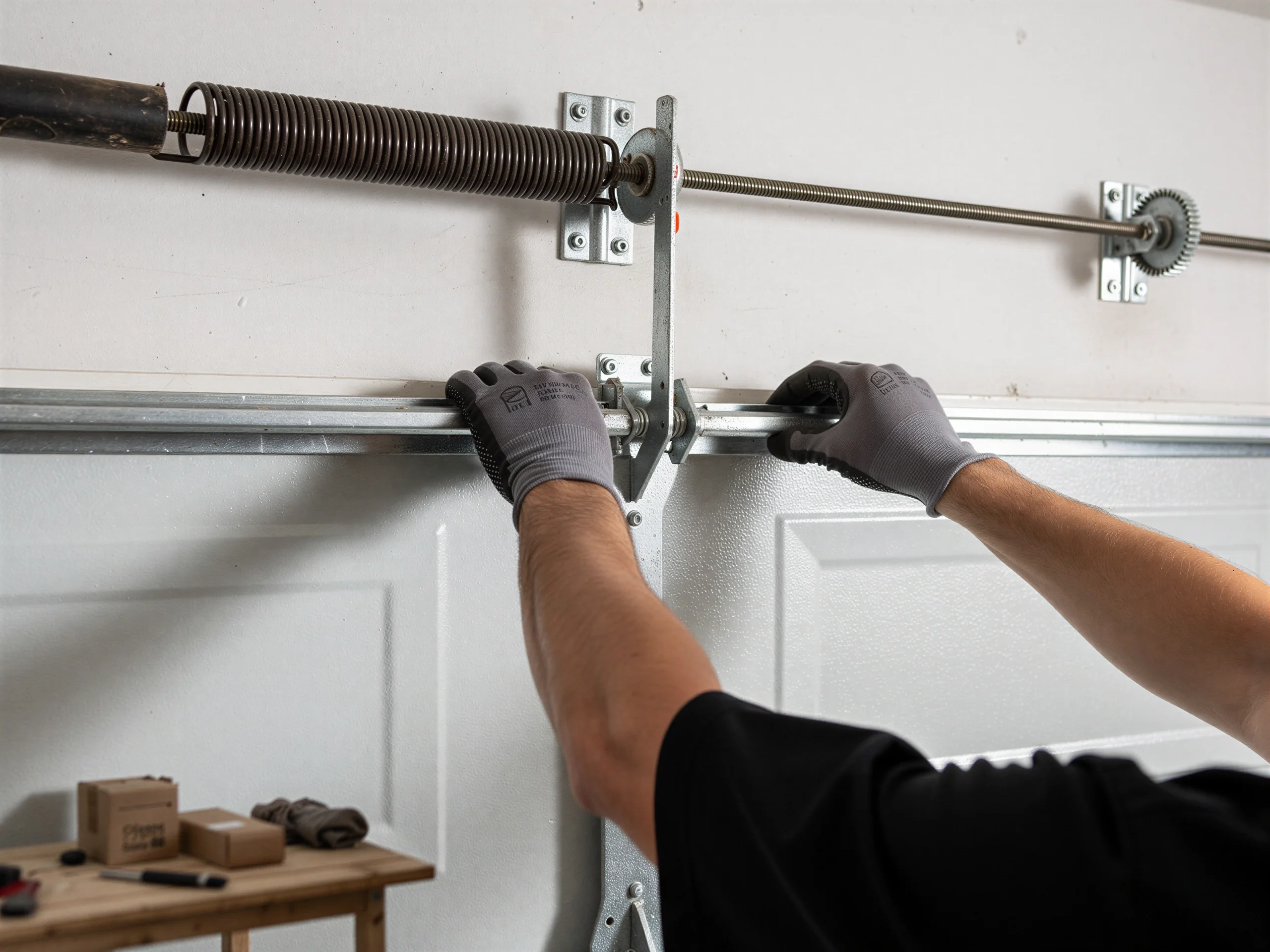
Opener replacement is straightforward if the header bracket and door are in otherwise good shape; it gets longer if we have to reinforce a bracket that's pulled loose from age.
Discontinued 1984 panel profiles
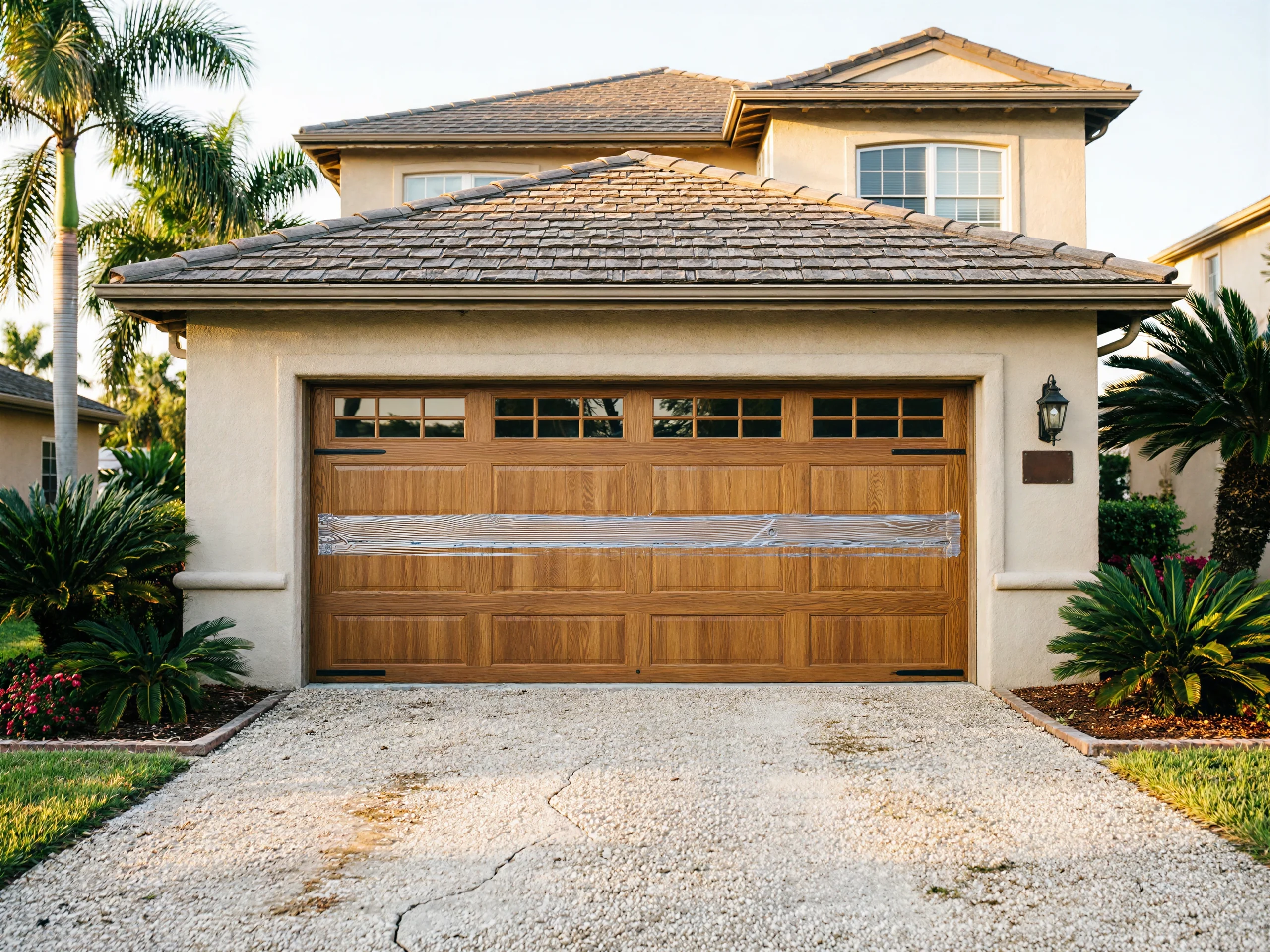
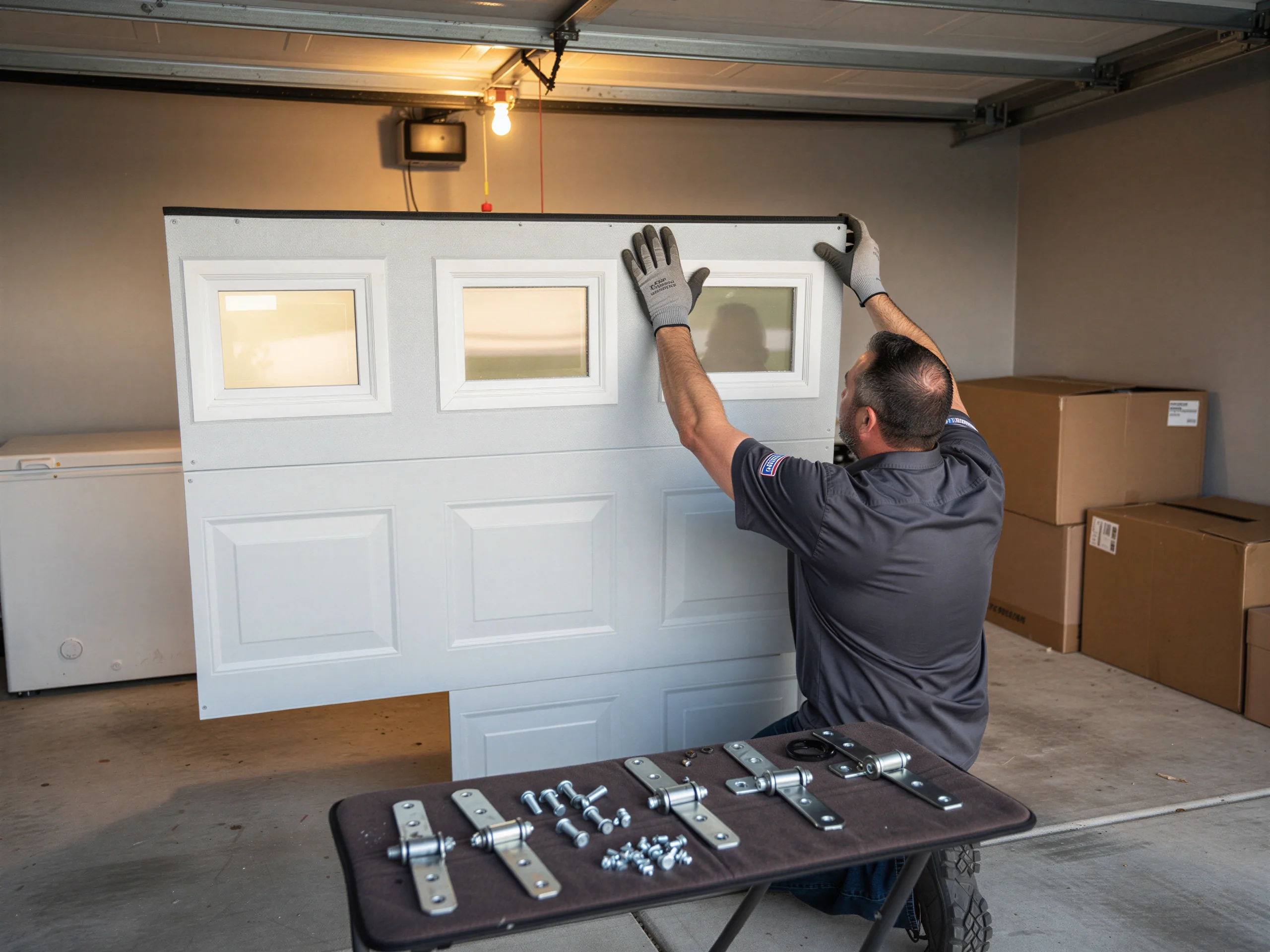
Panel replacement is the one we're honest about: original 1984 panel profiles are often discontinued, so matching a single damaged panel to the rest of a faded door isn't always possible, and sometimes the straight answer is replacing the whole door rather than chasing a panel that won't match.
What Is on the Truck
We stock torsion springs across the common sizes that match this area's build era, standard roller and cable sets, and steel panel sections sized for 1980s-90s door widths, since that's most of what we're pulling up to in this part of the service area. Openers on the truck are current production units, since original chain-drive models from 1984 aren't manufactured anymore and replacement is the only option once one fails for good. What we don't carry is custom or discontinued panel profiles - those get special-ordered, and we'll tell you upfront if your door falls into that category rather than promising a same-visit fix that isn't possible.
Talk to a local pro
Garage door service in North Port?
Same-day service with honest, upfront quotes.